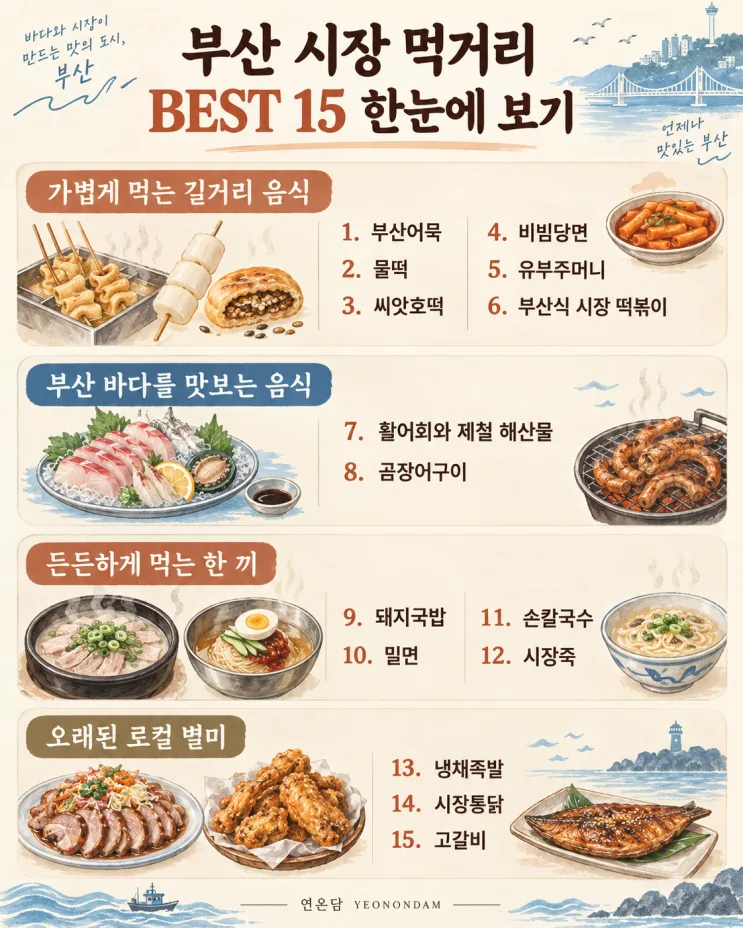
Busan travel · a market food guide from the host of Yeonondam Gwangalli Beach Branch
Busan market food guide: BEST 15
From ssiat hotteok, mul-tteok, and bibim dangmyeon to raw fish and grilled hagfish
From hearty meals like dwaeji gukbap and milmyeon to street snacks like mul-tteok, bibim dangmyeon, and ssiat hotteok, this Busan market food guide rounds up 15 things worth eating. I also included six Instagram-style market cards below with signature foods by market.
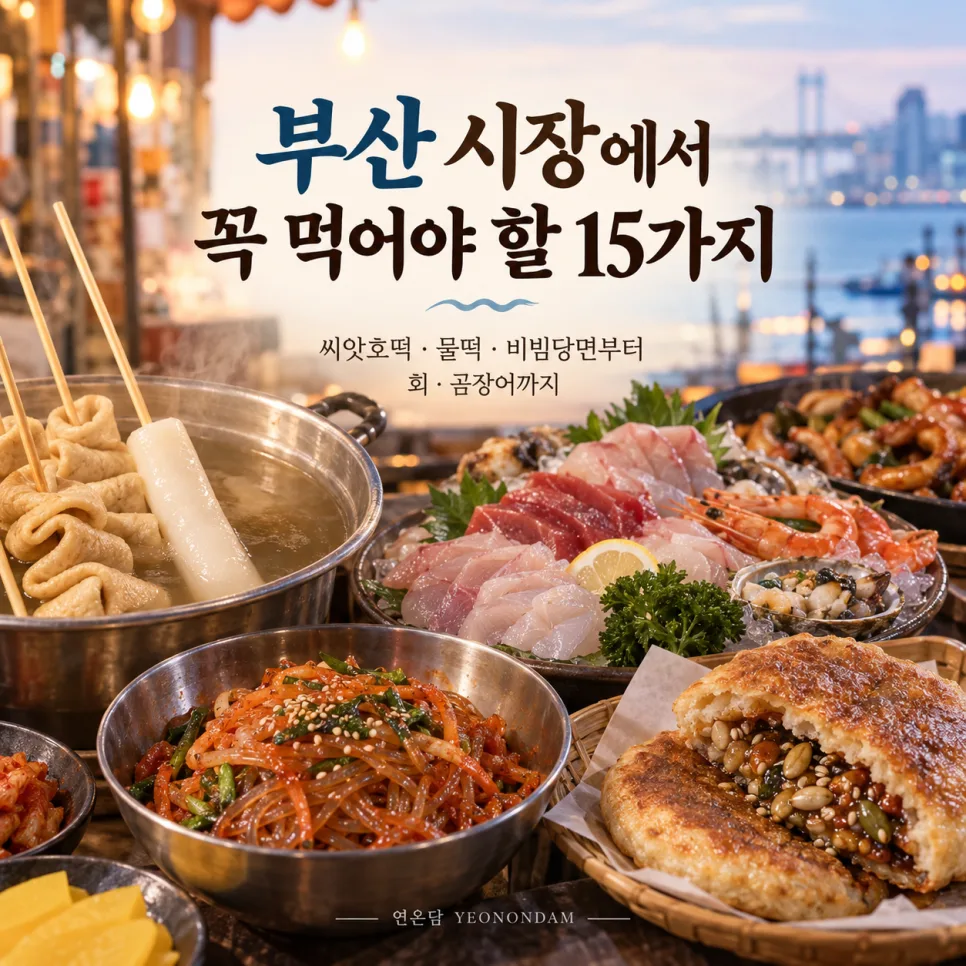
When you start planning a trip to Busan, these questions always come up: “What should I eat in Busan?” “Do I have to eat raw fish at Jagalchi Market?” “What’s the difference between Gukje Market and Bupyeong Kkangtong Market when it comes to food?” “Besides ssiat hotteok, what can I only really try in Busan?”
Busan has filling local staples like dwaeji gukbap and milmyeon, but it’s also a city made for grazing your way through market alleys. There’s mul-tteok, chewy rice cake simmered in hot fish cake broth, bibim dangmyeon tossed in a spicy sauce, ssiat hotteok packed with seeds and nuts, and grilled ggomjangeo sizzling over charcoal. Even within the same city, each market has its own mood and its own flavor.
Hi, I’m the host of Yeonondam Gwangalli Beach Branch, a small stay tucked into the alleys near Gwangalli Beach. After check-in, the question I hear most from guests is, “What should we eat in Busan?” It’s hard to narrow it down to just one or two things, so I usually recommend it by neighborhood: raw fish at Jagalchi Market, ssiat hotteok and bibim dangmyeon in Nampo-dong, and naengchae jokbal or old-school market fried chicken at Bupyeong Kkangtong Market.
Previous post ‘Complete guide to Busan market travel’If that post mapped out a route from Gwangalli to Jagalchi Market, Gukje Market, Bupyeong Kkangtong Market, Haeundae Traditional Market, and Bujeon Market, this one focuses on what to eat at Busan markets. From raw fish and seafood that really capture Busan’s coastal side to easy market bites like mul-tteok, bibim dangmyeon, and ssiat hotteok, plus local comfort meals like dwaeji gukbap, kalguksu, and market juk, I pulled everything together here.
|
※ This BEST 15 isn’t an objective ranking of what tastes best. It’s Yeonondam’s host-picked list based on what feels most Busan, what’s easy to find in the markets, and what travelers will genuinely enjoy experiencing. You won’t find all 15 foods in one market, so I recommend choosing two or three based on the area you’re visiting. |
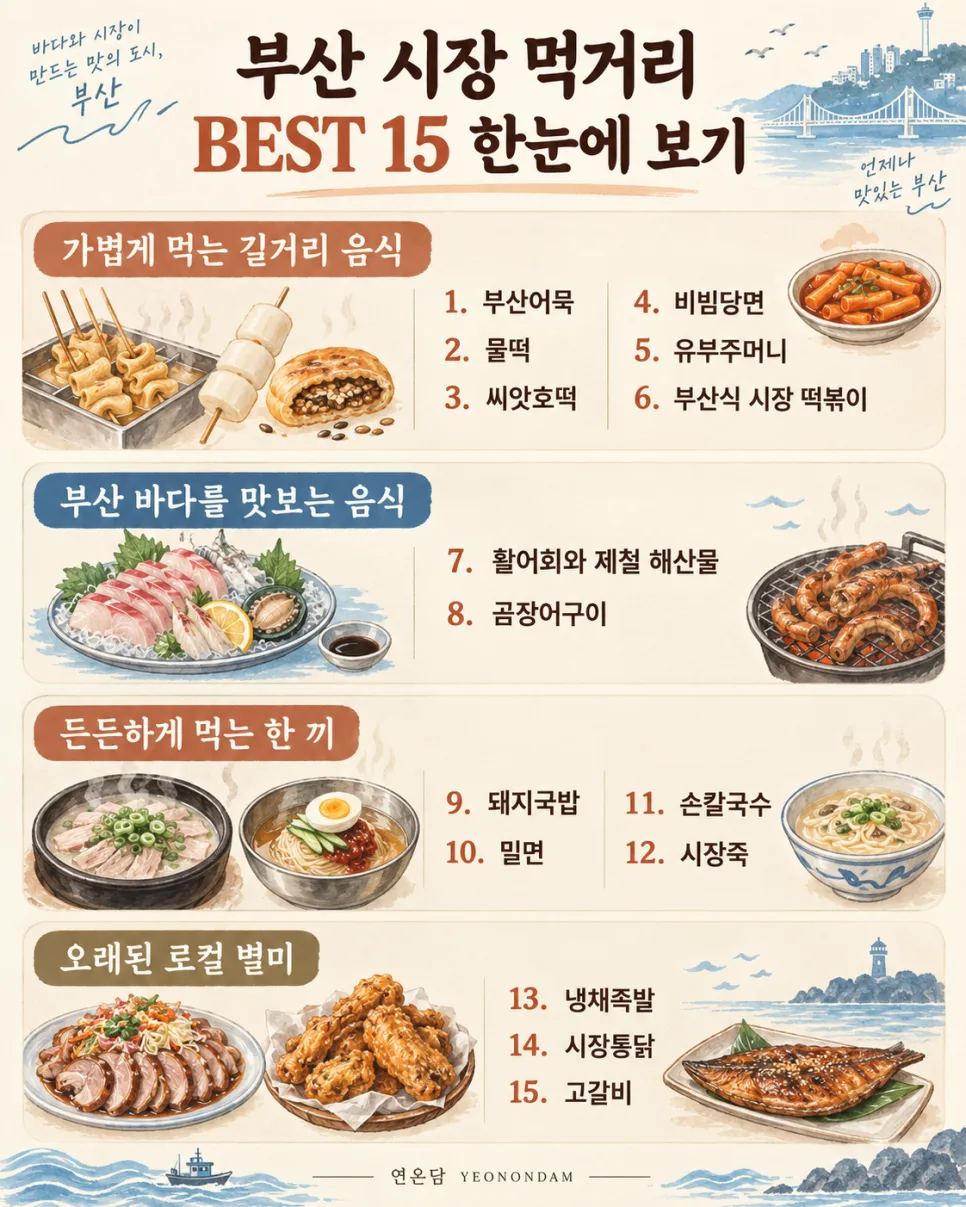
Busan market food guide: BEST 15 at a glance
Easy street snacks
-
Busan fish cake
-
mul-tteok
-
ssiat hotteok
-
bibim dangmyeon
-
yubu jumoni
-
Busan-style market tteokbokki
Tastes of the sea
-
raw fish and seasonal seafood
-
grilled ggomjangeo
Hearty full meals
-
dwaeji gukbap
-
milmyeon
-
hand-cut kalguksu
-
market juk
Old-school local specialties
-
naengchae jokbal
-
market fried chicken
-
gogalbi
Street food
Easy street snacks
1Busan fish cake
The first flavor you’ll run into at a Busan market
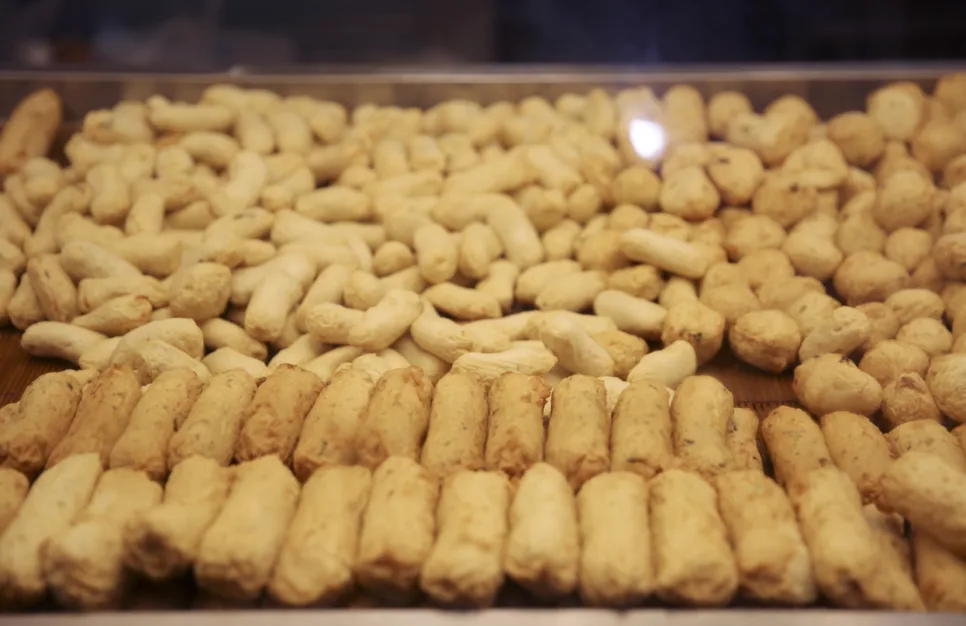
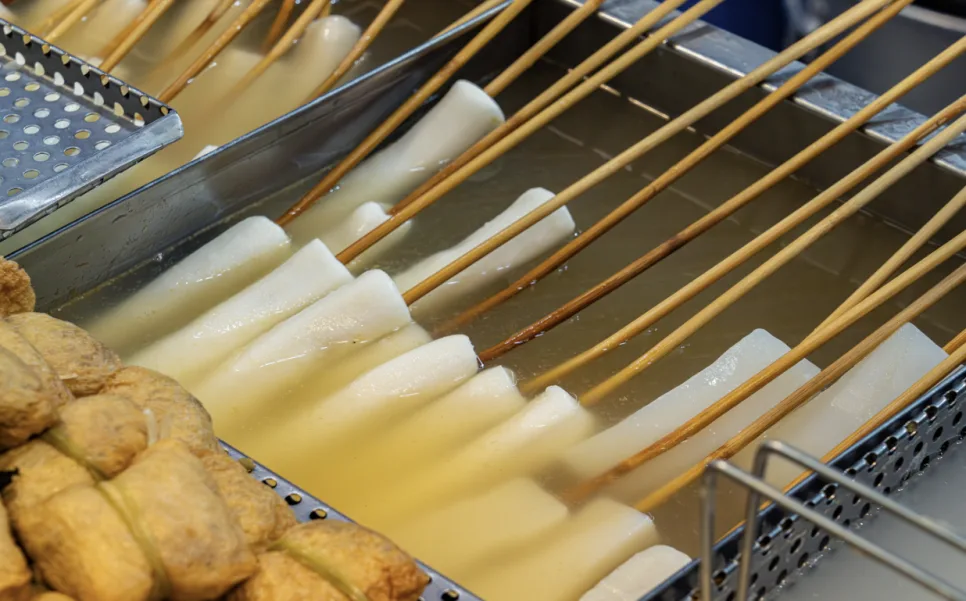
Walk through any Busan market alley and sooner or later you’ll catch the smell of warm broth drifting your way. Inside the steaming pots are skewers of fish cake and rice cake, and people naturally stop mid-walk to grab one. It’s one of the easiest, most approachable ways to start a Busan market food guide adventure.
Busan fish cake is made from ground fish paste that’s either fried or steamed. On the street, it’s usually served on skewers with hot broth, while specialty shops inside the markets often offer versions filled with cheese, vegetables, or seafood. The fish ratio, frying style, and broth all vary from stall to stall, which makes it fun to compare as you hop between markets.
|
Where to try it Gukje Market · Bupyeong Kkangtong Market · Haeundae Traditional Market · Bujeon Market How to eat it Instead of ordering a bunch right away, start with one or two basic fish cakes. If you’re planning to eat more, go easy on the broth too — it fills you up faster than you’d think. |
2mul-tteok
Busan-style garaetteok simmered in fish cake broth
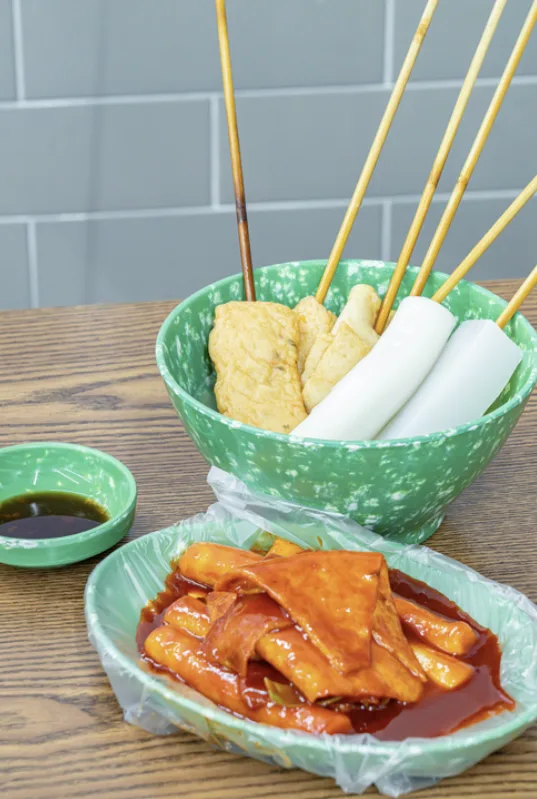
If you spot a long white rice cake skewer sitting next to the fish cakes, don’t pass it by. Mul-tteok is a Busan market classic made by slowly simmering garaetteok in fish cake broth. At first you might wonder why anyone would eat rice cake this way, but one bite makes it click. The outside turns soft while the center stays pleasantly chewy, and it’s especially good after spicy tteokbokki or bibim dangmyeon when you want something warm and mild.
It may feel a little unfamiliar to visitors, but for Busan locals it’s one of those instantly recognizable comfort foods that goes hand in hand with fish cake. If you want something simple that feels distinctly Busan, definitely try it once.
|
Where to try it Gukje Market · Bupyeong Kkangtong Market · Haeundae Traditional Market How to eat it A safe order is one or two fish cakes plus one mul-tteok skewer. Depending on the stall, you might brush on a little soy-based sauce or just eat it with the broth. |
3ssiat hotteok
The sweet snack that defines the alleys of Nampo-dong
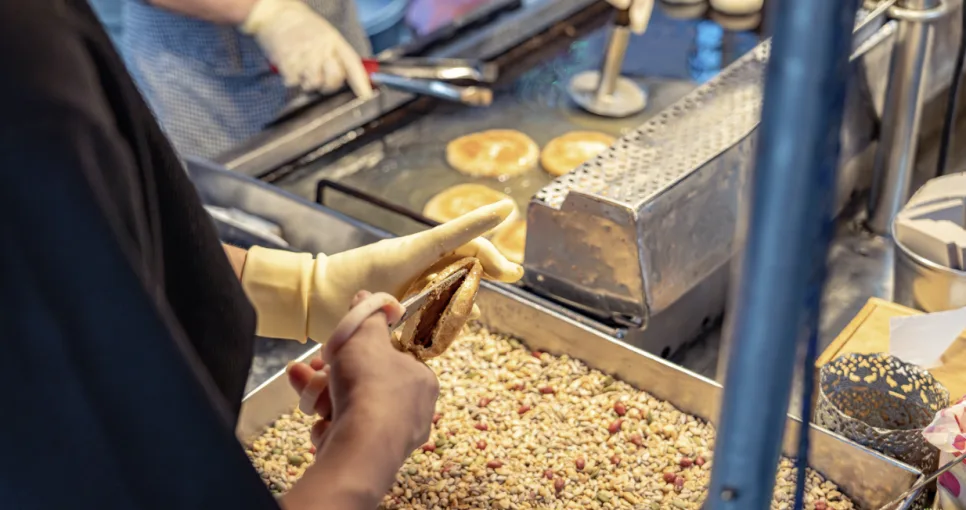
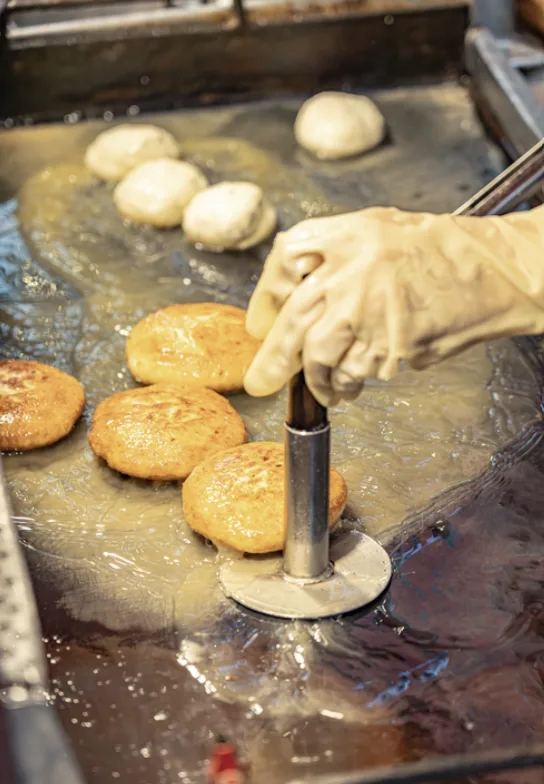
You really can’t talk about Busan street food without mentioning ssiat hotteok. It’s a griddled sweet pancake split open and stuffed with sunflower seeds, pumpkin seeds, peanuts, and other crunchy nuts and seeds. Compared with regular hotteok, the outside is crispier, while the inside is filled with sweet syrup and nutty richness. Holding a warm cup of ssiat hotteok while walking through BIFF Square and the alleys of Nampo-dong is one of those small travel moments that sticks with you. In fall and winter, especially, one hot ssiat hotteok feels surprisingly comforting.
|
Where to try it BIFF Square · Gukje Market · around Nampo-dong How to eat it The inside is extremely hot right after it’s made. Let it cool for a minute in the paper cup before taking a bite, and keep it upright so the seeds don’t spill out. |
4bibim dangmyeon
A humble bowl best eaten in the alleys of Gukje Market
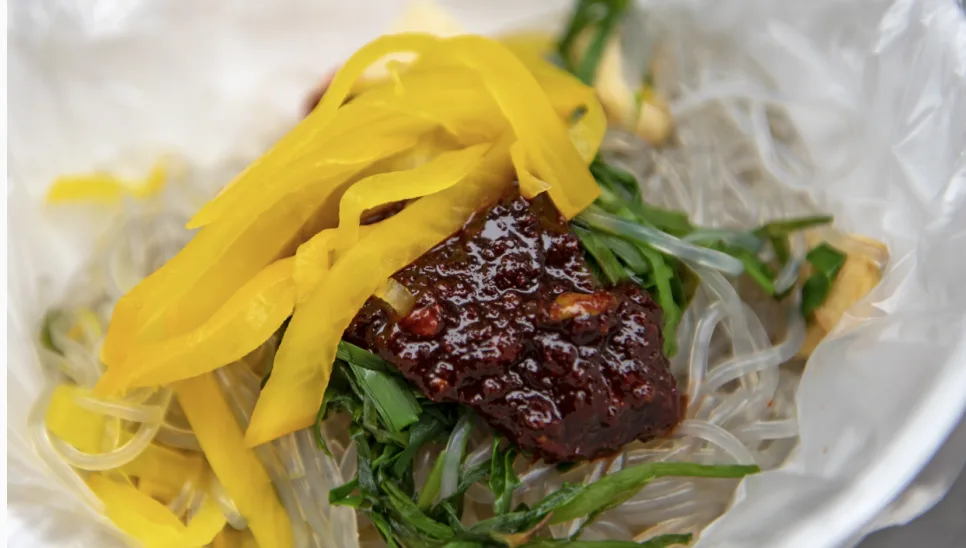
Bibim dangmyeon is made with boiled glass noodles topped with fish cake, pickled radish, chives, and vegetables, then tossed in a spicy sauce. Unlike japchae, it isn’t stir-fried — the noodles and toppings are mixed fresh to order with seasoning. It’s not flashy, but when you’re perched on a tiny market stool eating a quick bowl in the middle of a busy alley, it becomes one of those foods you remember for a long time. The noodles are soft, the pickled radish adds crunch, and the sweet-spicy sauce ties everything together. Each stall tweaks the heat level and toppings a little differently, so it always feels familiar but slightly new.
|
Where to try it Gukje Market · Bupyeong Kkangtong Market How to eat it Bibim dangmyeon alone can feel a little light for a full meal. Pair it with yubu jumoni, fish cake, or tteokbokki and it turns into a great little market food crawl. |
5yubu jumoni
A hot broth dish you’ll crave on chilly days
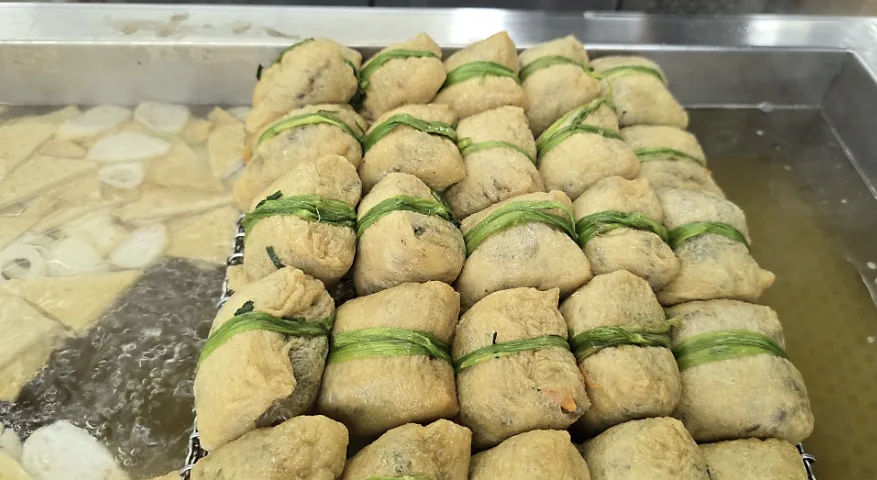
Yubu jumoni is made by stuffing tofu skin pouches with glass noodles and vegetables, tying them closed, and simmering them in fish cake broth. It looks small, but once you split it open with chopsticks, it’s packed with noodles inside. The tofu skin soaks up the savory broth, and the soft noodles make it more filling than it looks. It’s especially good in winter, on windy days, or when it’s raining. If you prefer warm, comforting broth over bold or spicy flavors, this one is especially satisfying.
|
Where to try it Bupyeong Kkangtong Market · around Gukje Market How to eat it The broth stays very hot all the way inside the pouch. Don’t eat it in one bite — split it in half with chopsticks and let it cool first. |
6Busan-style market tteokbokki
Thick rice cakes with a rich, clingy sauce
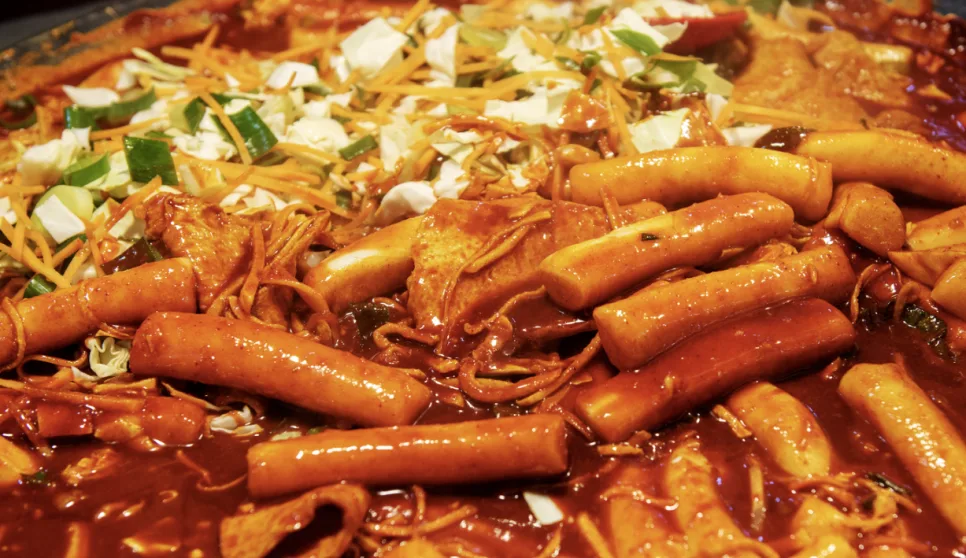
You can find tteokbokki anywhere in Korea, but market tteokbokki in Busan has its own feel. The rice cakes are usually thick and chewy, coated in a dense, reduced sauce, often with long slices of fish cake or even radish mixed in. Every stall cooks it a little differently, and some bring out a natural sweetness and umami from the radish. The appeal isn’t a polished plated dish — it’s that big iron griddle, the sauce slowly reducing all day, and the satisfying bite of thick rice cakes cut to order right in front of you.
|
Where to try it Bupyeong Kkangtong Market · Gukje Market · Haeundae Traditional Market How to eat it Instead of finishing a whole plate by yourself, share one with your group and add a little fish cake or fried snacks on the side. Portion control matters on a market trip. |
From the sea
Foods that taste like Busan’s coastline
7raw fish and seasonal seafood
The closest way to taste the sea in Busan
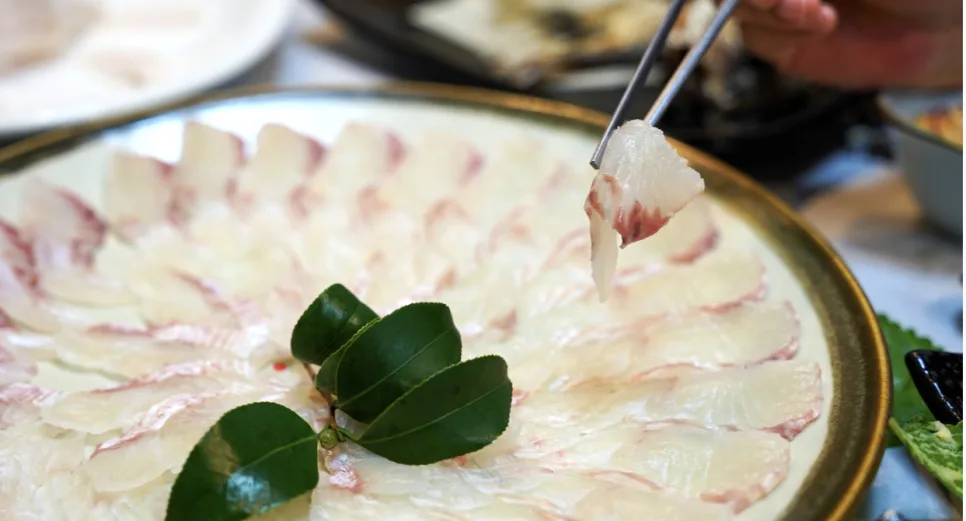
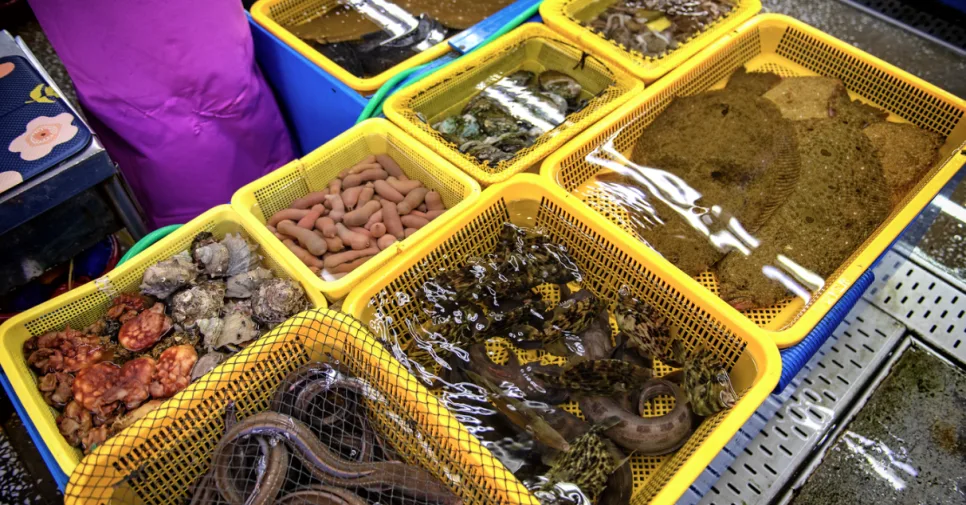
If you’re visiting Busan, a coastal city, it’s hard not to want raw fish and seasonal seafood at least once. At Jagalchi Market and Millak Hoe Town, you can walk past the tanks, choose your fish, and have it sliced for you on the spot to eat there or take away. Even the process of picking your own fish is part of what makes a Busan seafood market visit special. From familiar choices like flounder and rockfish to seasonal catches that change throughout the year, plus abalone, sea snails, sea cucumber, and sea squirt, there’s a lot to choose from. If you’re not sure what to order, a mixed sashimi platter is the easiest place to start. And if sashimi alone feels incomplete, add maeuntang, a spicy fish stew, to finish on a more filling note.
|
Where to try it Jagalchi Market · Millak Hoe Town How to eat it Before you choose, check the origin, weight, and price first. Also ask whether table setting fees, maeuntang, or vegetables are charged separately. If you’re taking it to go, let them know whether you’ll eat it right away or later so they can pack it properly. |
8grilled ggomjangeo
A Busan market dish with real fire-kissed flavor
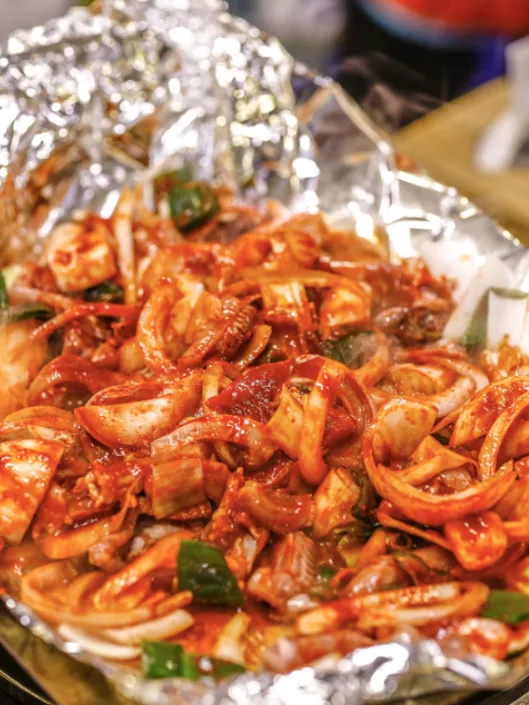
In Busan, hagfish is commonly called ggomjangeo or komjangeo. It’s cleaned, grilled over a hot grate, and served either simply salted or coated in a spicy sauce. The signature is that smoky grilled aroma and the springy, chewy texture. The look and texture can feel unfamiliar at first, but if you want to try a seafood dish that feels unmistakably Busan, it’s worth going for. The spicy version is bold and intense, while the salted version lets you taste the fish itself along with the char.
|
Where to try it Jagalchi Market · around Haeundae Traditional Market How to eat it If it’s your first time, the spicy version is usually easier to get into. If you’re sensitive to heat, start with the salted one instead. |
A proper meal
Hearty meals to eat in Busan
9dwaeji gukbap
The classic filling meal every Busan trip seems to include
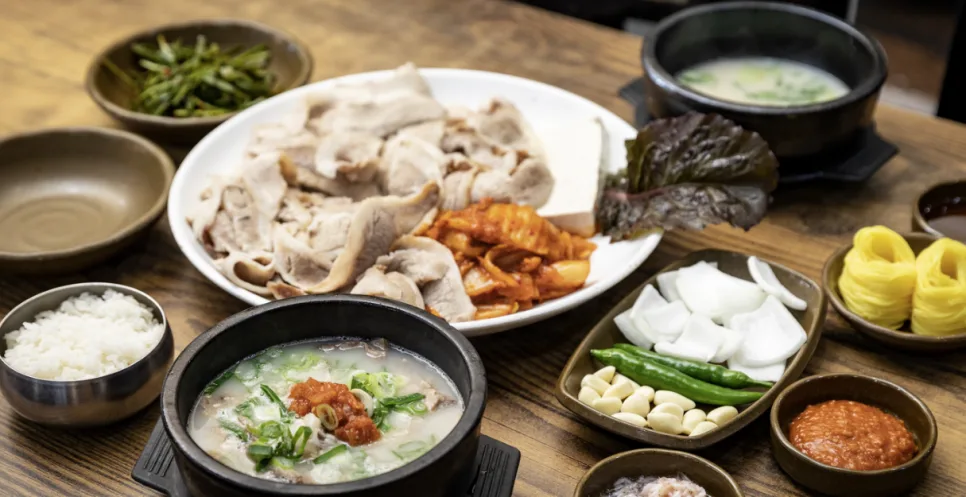
When people ask what to eat in Busan, this is one of the first dishes that comes to mind. It’s a hot soup with pork and rice, and depending on the restaurant, the broth can be clear and light or milky and rich. Part of the fun of dwaeji gukbap is customizing it to your taste. Add salted shrimp for seasoning, then a little chive and spicy paste, and the whole bowl changes. With kkakdugi or kimchi on the side, it becomes a deeply satisfying meal. You’ll also find places in and around markets that open early, so it works just as well for breakfast or a hangover meal.
|
Where to try it around Seomyeon Market · around Bujeon Market · near Busan traditional markets How to eat it Don’t stir in all the spicy paste right away. Taste the clear broth first, then add salted shrimp, chives, and spicy paste little by little until it tastes right to you. |
10milmyeon
A cool, refreshing break between market stops
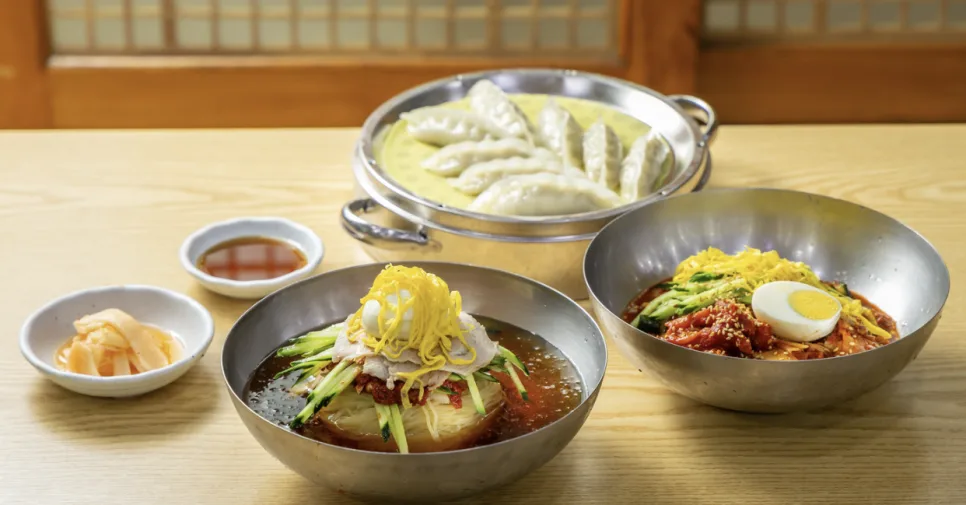
Milmyeon is one of Busan’s signature local dishes. There’s mul-milmyeon, served in a cold broth, and bibim-milmyeon, tossed in a spicy sauce. It’s especially perfect in summer, but it’s also great the day after heavier foods like dwaeji gukbap or grilled ggomjangeo when you want something lighter. Strictly speaking, it’s not market stall food, but it’s such an easy Busan meal to find around traditional markets that it belongs on this list as a pre- or post-market stop.
|
Where to try it Nampo-dong · Seomyeon · around Bujeon Market How to eat it If it’s your first time, mul-milmyeon with the icy broth is the safest choice. If you like heat, go for bibim-milmyeon. Ordering dumplings to share is a good combo too. |
11hand-cut kalguksu
A market meal that feels more local than touristy
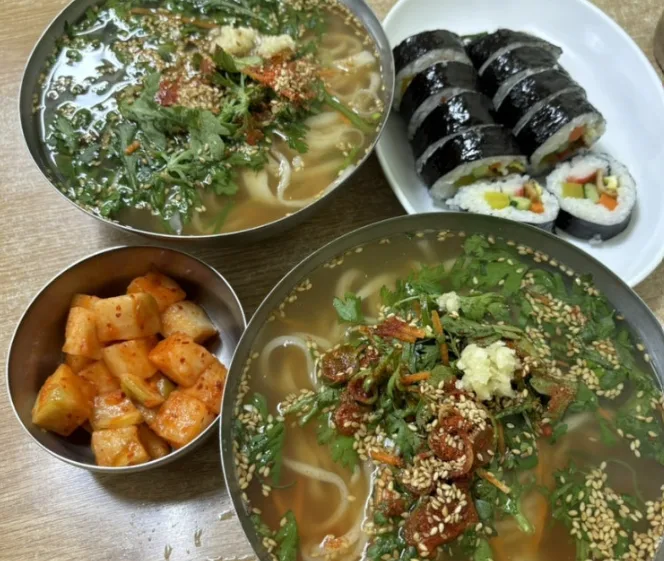
If you’re curious about the kind of ordinary meal Busan locals actually eat at markets, rather than something made for tourists, hand-cut kalguksu is a great pick. It’s simple: soft noodles in a warm anchovy broth, usually topped with seaweed flakes and seasoning. The details vary by market, but the common thread is that it’s unfussy, comforting, and easy to eat. It’s especially good if you had a lot of raw fish and late-night food the day before, or if cold dishes don’t sound appealing. In a small market restaurant filled with vendors and regulars, it gives you a glimpse of everyday Busan beyond the tourist zones.
|
Where to try it Bujeon Market · Seomyeon Market How to eat it Some places open from the morning, so it works well as a late breakfast or early lunch. Market shops don’t always keep consistent hours, though, so if you have a specific place in mind, check before you go. |
12market juk
A gentle breakfast at Bujeon Market
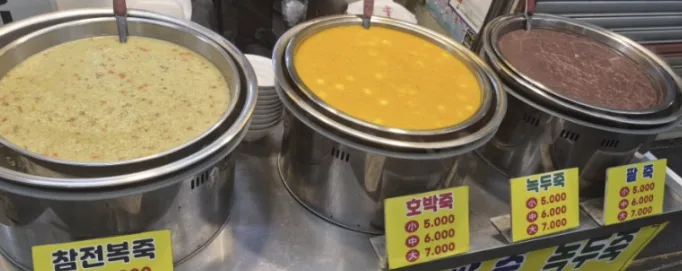
Bujeon Market is a true everyday market where Busan residents shop for vegetables, fruit, side dishes, dried seafood, and fresh seafood — not just a place for tourists. Inside, you’ll find warm bowls of juk like red bean porridge, pumpkin porridge, and abalone porridge. It’s less of a Busan-only specialty and more of a food that reflects the lived-in rhythm of Bujeon Market. If you ate a lot of rich or spicy food the day before, or you’re traveling with parents or kids, it’s a very comfortable option.
|
Where to try it around Bujeon Market How to eat it I recommend it for breakfast or as an easy hangover meal. If takeaway is available, bringing it back to your stay and eating it slowly is nice too. |
Old local flavors
Long-loved Busan market specialties
13naengchae jokbal
A tangy, mustardy local specialty you’ll find at Bupyeong Market
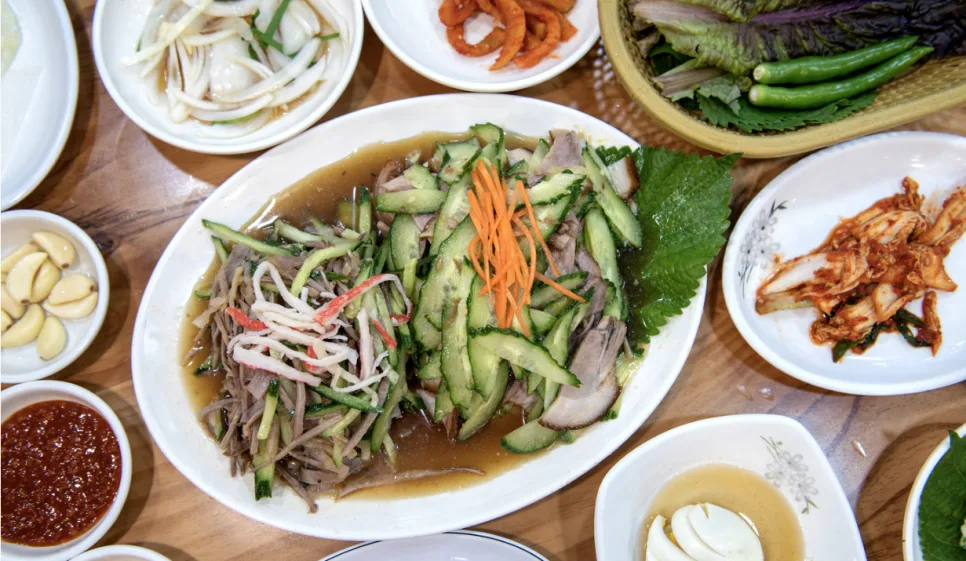
Naengchae jokbal is one of Busan’s signature dishes: chilled pig’s feet tossed with cucumber, carrot, jellyfish, and a sharp mustard sauce. Unlike warm jokbal, this version is cold and refreshing, and the mustard cuts through the richness beautifully. Between the crisp vegetables, chewy pork, and pleasantly crunchy jellyfish, the texture is half the appeal. Bupyeong Jokbal Alley is especially known for it, which makes it an easy stop to pair with Bupyeong Kkangtong Market.
|
Where to try it Bupyeong Kkangtong Market · Bupyeong Jokbal Alley How to eat it The mustard can be strong, so if you don’t handle sharp heat well, ask whether they can adjust the sauce. Portions are generous, so it’s better with two or more people than solo. |
14market fried chicken
The kind of Busan market late-night food that’s perfect to take back to your stay
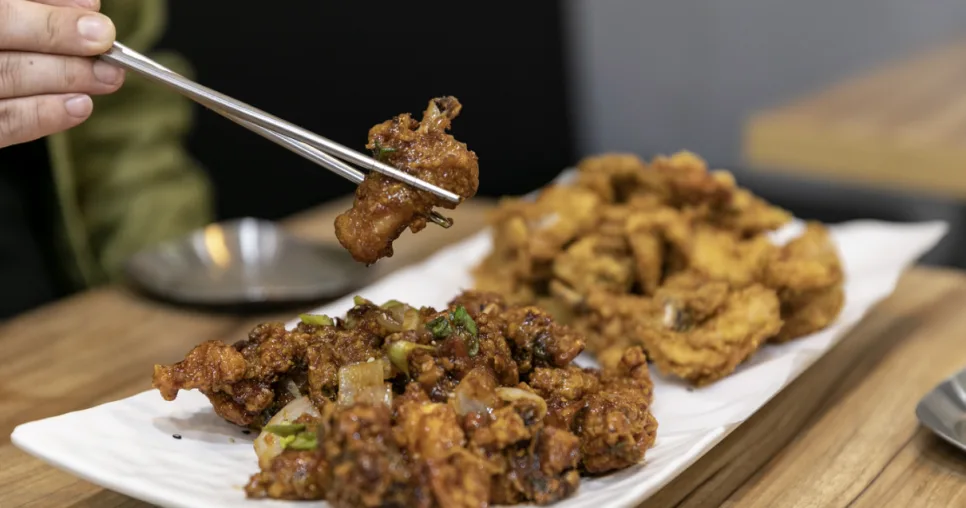
Market fried chicken is old-school Korean fried chicken, usually chopped into large or bite-size pieces and deep-fried until crisp in a big pot of oil. It looks rougher and less polished than franchise chicken, and the coating is often thinner, but that fresh-fried aroma and crackly texture are exactly the charm. At Bupyeong Kkangtong Market, it’s one of the signature foods right alongside naengchae jokbal. If you’ve already eaten a lot while walking the market, packing it up and sharing it later at your accommodation is a great move.
|
Where to try it Bupyeong Kkangtong Market · Seomyeon Market How to eat it Portions can be big, so check the size before ordering. If you’re taking it to go, make sure they included sauce and pickled radish separately. |
15gogalbi
Grilled mackerel from Busan’s old alleyway food culture
Gogalbi is an old Busan alley dish made by grilling mackerel, sometimes with seasoning added at the end. Even though the name includes “galbi,” it isn’t meat — it’s fish. The name is said to come from the way you pull the flesh apart with chopsticks, a little like eating ribs. It used to be an easy, affordable dish in Busan’s backstreets and old drinking spots, and it still carries that older side of the city’s food culture that feels very different from polished tourist fare. Depending on the place, it may be served simply salted or brushed with a sweet-spicy glaze before grilling.
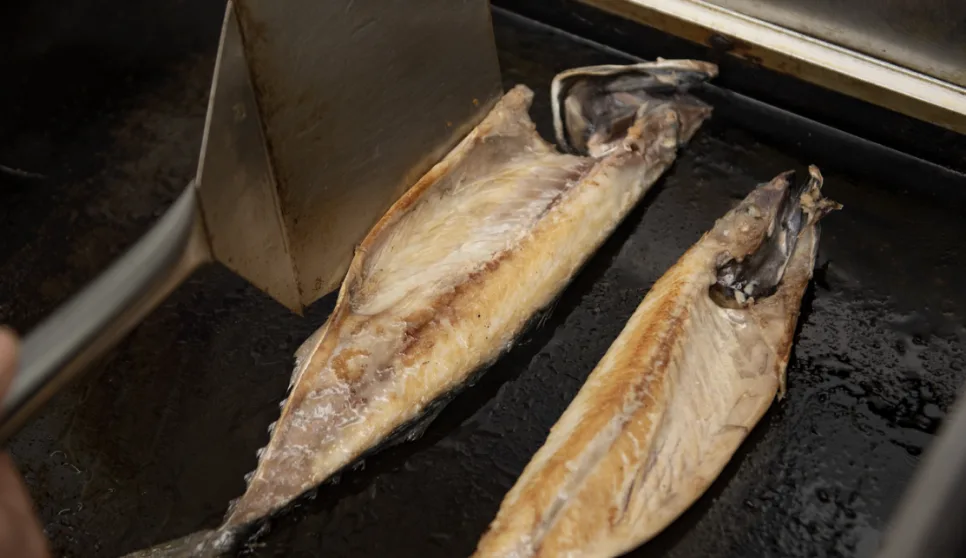
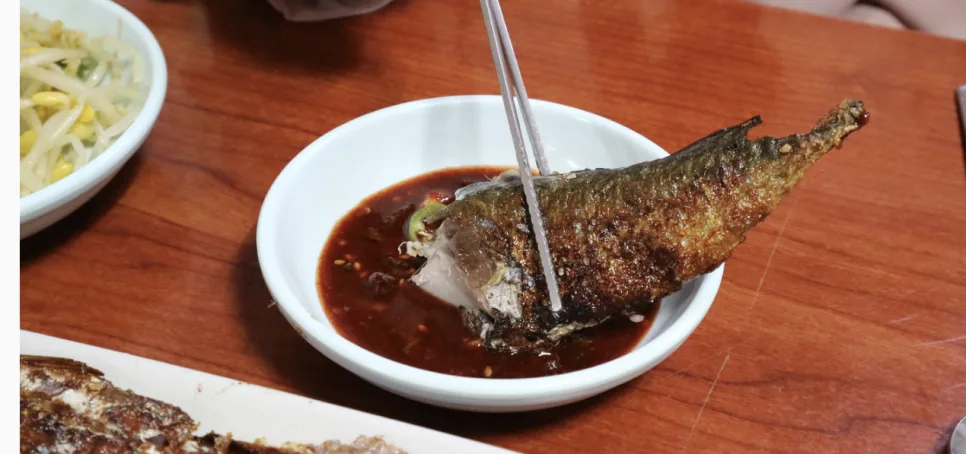
|
Where to try it around Nampo-dong · around Bupyeong Market How to eat it If you’re having it as a meal, order rice with it. If you’re with a group, it’s best shared alongside other dishes. Watch out for bones, especially if you’re eating with kids. |
If choosing is hard
Pick just three based on your travel style
It’s not realistic to eat all 15 in one day. Choose about three depending on your trip style and who you’re traveling with.
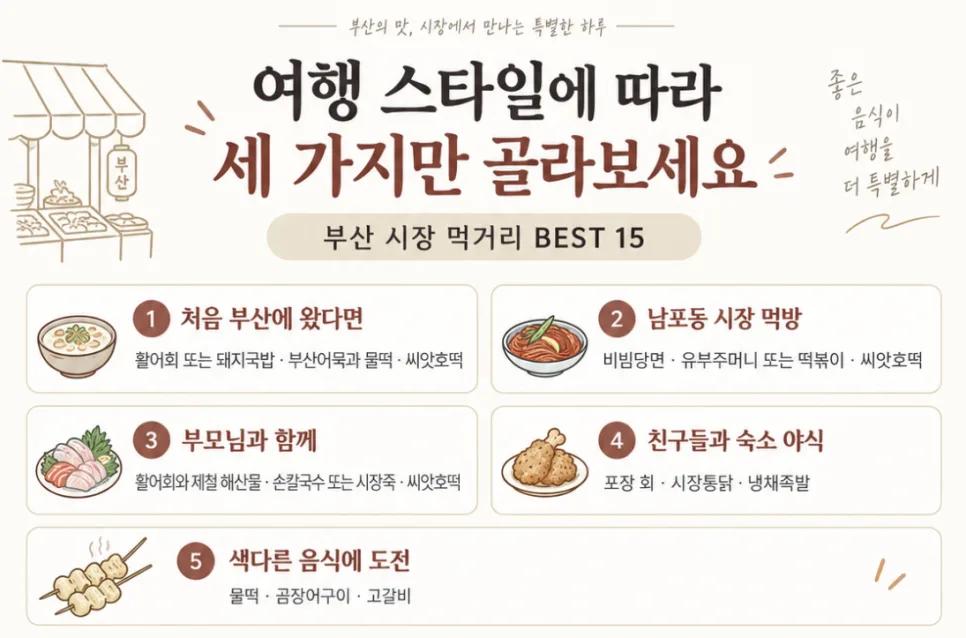
|
If it’s your first time in Busan raw fish or dwaeji gukbap · Busan fish cake and mul-tteok · ssiat hotteok |
|
For a Nampo-dong market food crawl bibim dangmyeon · yubu jumoni or tteokbokki · ssiat hotteok |
|
If you’re traveling with parents raw fish and seasonal seafood · hand-cut kalguksu or market juk · ssiat hotteok |
|
Late-night food back at the stay with friends takeaway sashimi · market fried chicken · naengchae jokbal |
|
If you want to try something different mul-tteok · grilled ggomjangeo · gogalbi |
By market
Quick picks for signature foods
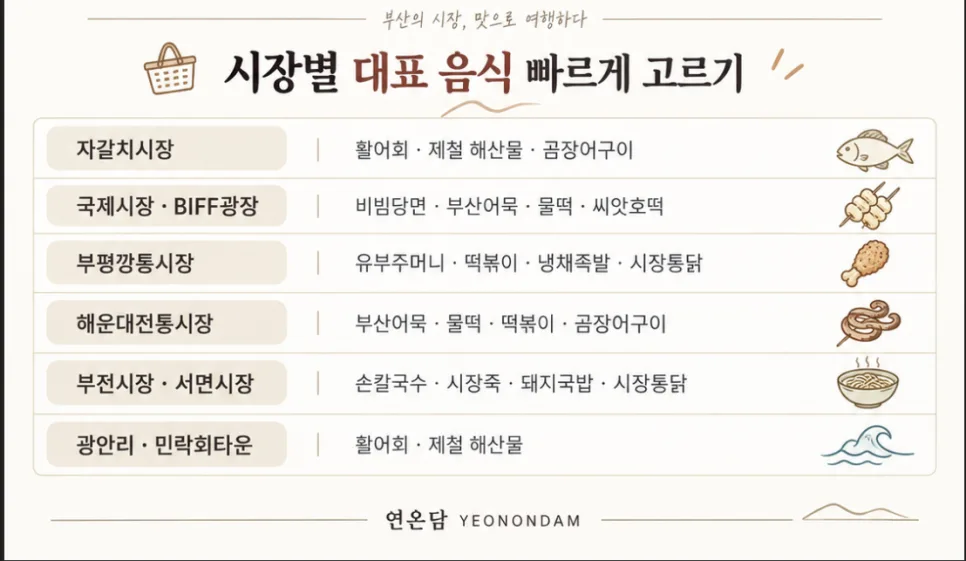
|
Market |
Signature foods |
|
Jagalchi Market |
raw fish · seasonal seafood · grilled ggomjangeo — the most direct taste of coastal Busan |
|
Gukje Market · BIFF Square |
bibim dangmyeon · Busan fish cake · mul-tteok · ssiat hotteok — ideal for a little street food crawl |
|
Bupyeong Kkangtong Market |
yubu jumoni · tteokbokki · naengchae jokbal · market fried chicken — market by day, night market by evening |
|
Haeundae Traditional Market |
Busan fish cake · mul-tteok · tteokbokki · grilled ggomjangeo — easy stop after the beach |
|
Bujeon Market · Seomyeon Market |
hand-cut kalguksu · market juk · dwaeji gukbap · market fried chicken — closer to everyday life in Busan |
|
Gwangalli · Millak Hoe Town |
raw fish · seasonal seafood — perfect for takeaway and a relaxed night back at your Gwangalli stay |
Food trip tips
This makes it easier
-
It’s much more fun to share small portions with a group than to eat too much at once. Think one fish cake, one mul-tteok, one bowl of bibim dangmyeon, and so on.
-
Some stalls still take cash only. It’s smart to carry a little cash, even though many places do accept cards or mobile payments.
-
Hot broth, iron griddles, and cooking tools are often right next to you. If you’re traveling with kids, be a little extra careful while moving around.
-
Prices, opening hours, and closing days can change depending on the season and each vendor’s situation. If you have a specific stall in mind, check the map or official channel again on the day of your visit.
Don’t try to eat all 15 in one market
Every market in Busan has its own flavor and atmosphere. At Jagalchi Market, raw fish and seafood from the sea take center stage first. At Gukje Market and BIFF Square, humble street foods like bibim dangmyeon and ssiat hotteok are what pull you in. Bupyeong Kkangtong Market is where naengchae jokbal and market fried chicken shine, while Bujeon Market is better for everyday local meals like kalguksu and juk.
On a day you’re staying in Gwangalli, picking up sashimi from Millak Hoe Town makes sense. On a Nampo-dong day, sharing bibim dangmyeon, yubu jumoni, and ssiat hotteok is more than enough. Waiting in line for famous food is part of travel too, but some of the best moments come when you slow down, wander an alley, spot something that looks good, and eat it right there. Plan a little less, and walk a little slower.
If you make it to Busan, I hope you eat well, stay warm, and get some real rest with the night sea of Gwangalli nearby.
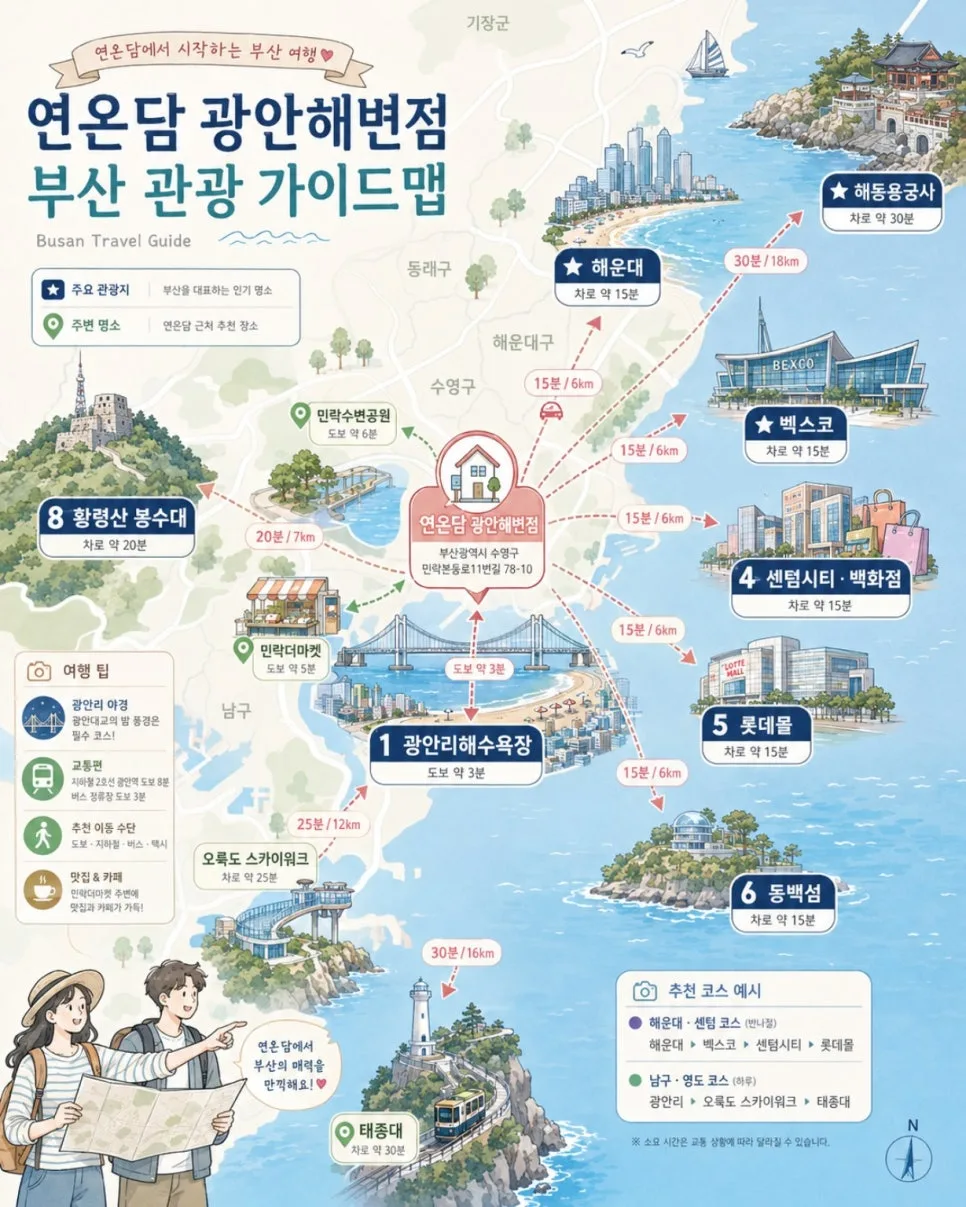
Yeonondam Gwangalli Beach Branch · private stay in Gwangalli
After your Busan market trip,
spend an easy night in Gwangalli
Explore Busan by day, and keep the evening to yourselves.
Stay your own way at Yeonondam.
|
After walking through Jagalchi Market and the alleys of Nampo-dong, and heading back with a few market foods packed up from Bupyeong Kkangtong Market, the best way to end a Busan market trip is to slow down at a stay near Gwangalli. |
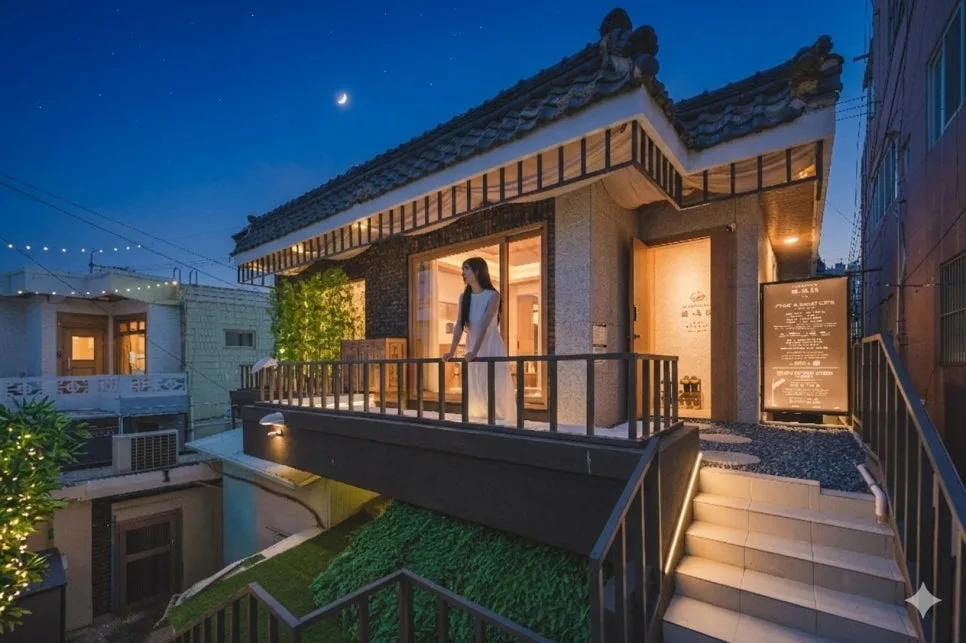
Yeonondam Gwangalli Beach Branchis a private accommodation about a 2-minute walk from Gwangalli Beach, with only one group per day. With two bedrooms, two bathrooms, and a dining space where everyone can sit together, it’s a comfortable fit for both family trips and friend getaways.
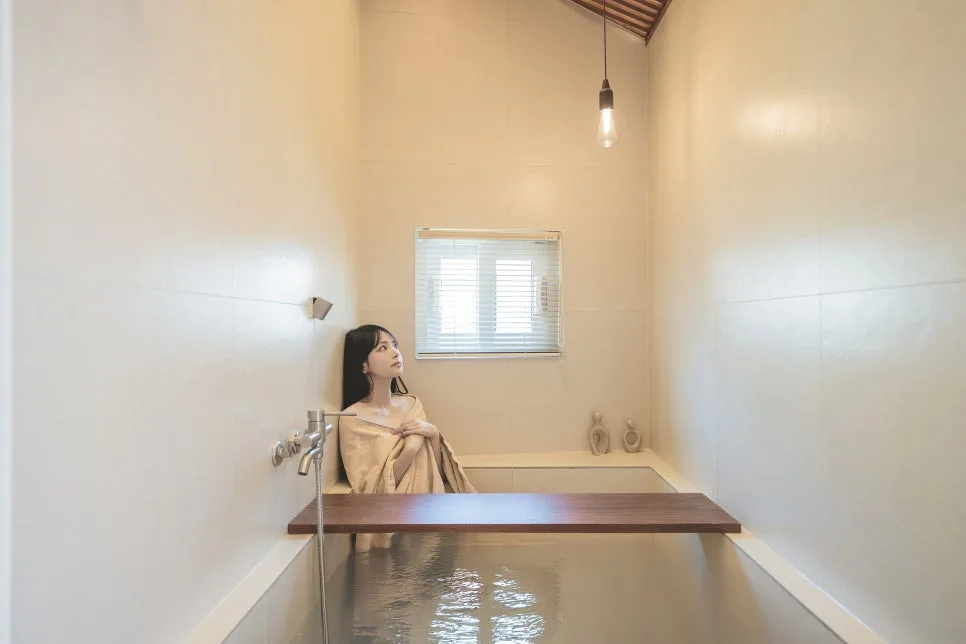
You can share the sashimi or market fried chicken you picked up during the day, soak in the jacuzzi to unwind, or end the night slowly with a movie in the cinema room.
Spend the day walking Busan’s markets and alleys, then spend the evening resting near the sea in Gwangalli with your own group. If you want more than just a place to sleep on your Busan trip, and you want the time spent together to be part of the memory, Yeonondam Gwangalli Beach Branch is a lovely place to do that.
Yeonondam Gwangalli Beach Branch
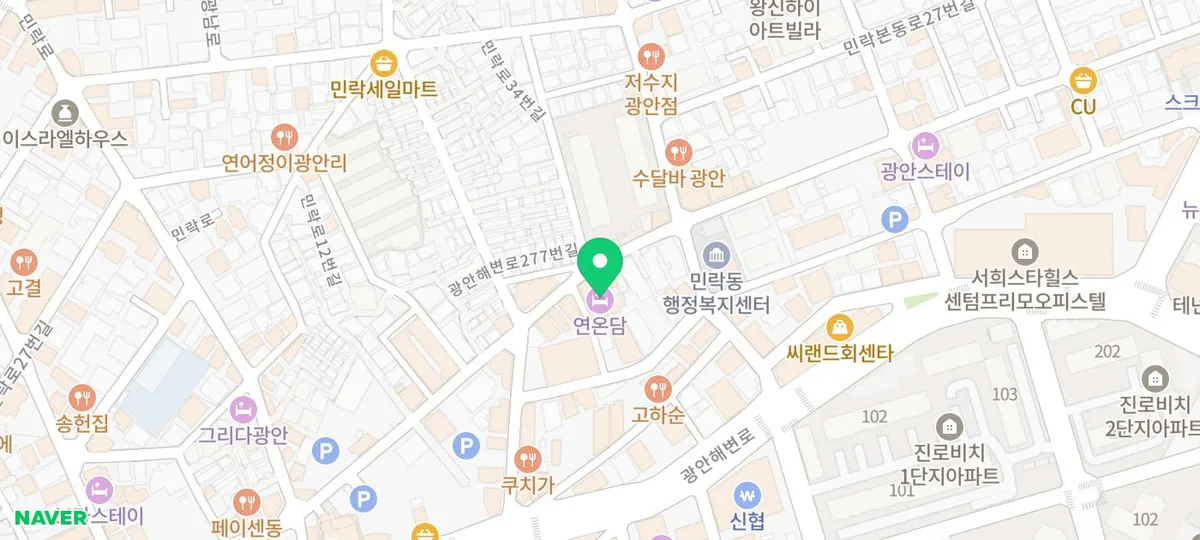
about a 2-minute walk to Gwangalli Beach
-
one private group per day · 2 bedrooms · 2 bathrooms
-
jacuzzi · cinema room · café-style dining space
-
a comfortable private stay for family trips and friend trips
View Yeonondam on Naver Map
naver.me/FqZhIYNhOpen View Yeonondam on Google Maps
share.google/0Ssvvo59EehaiRxaKOpen
Explore Busan by day, and keep the evening to yourselves.
Stay your own way at Yeonondam
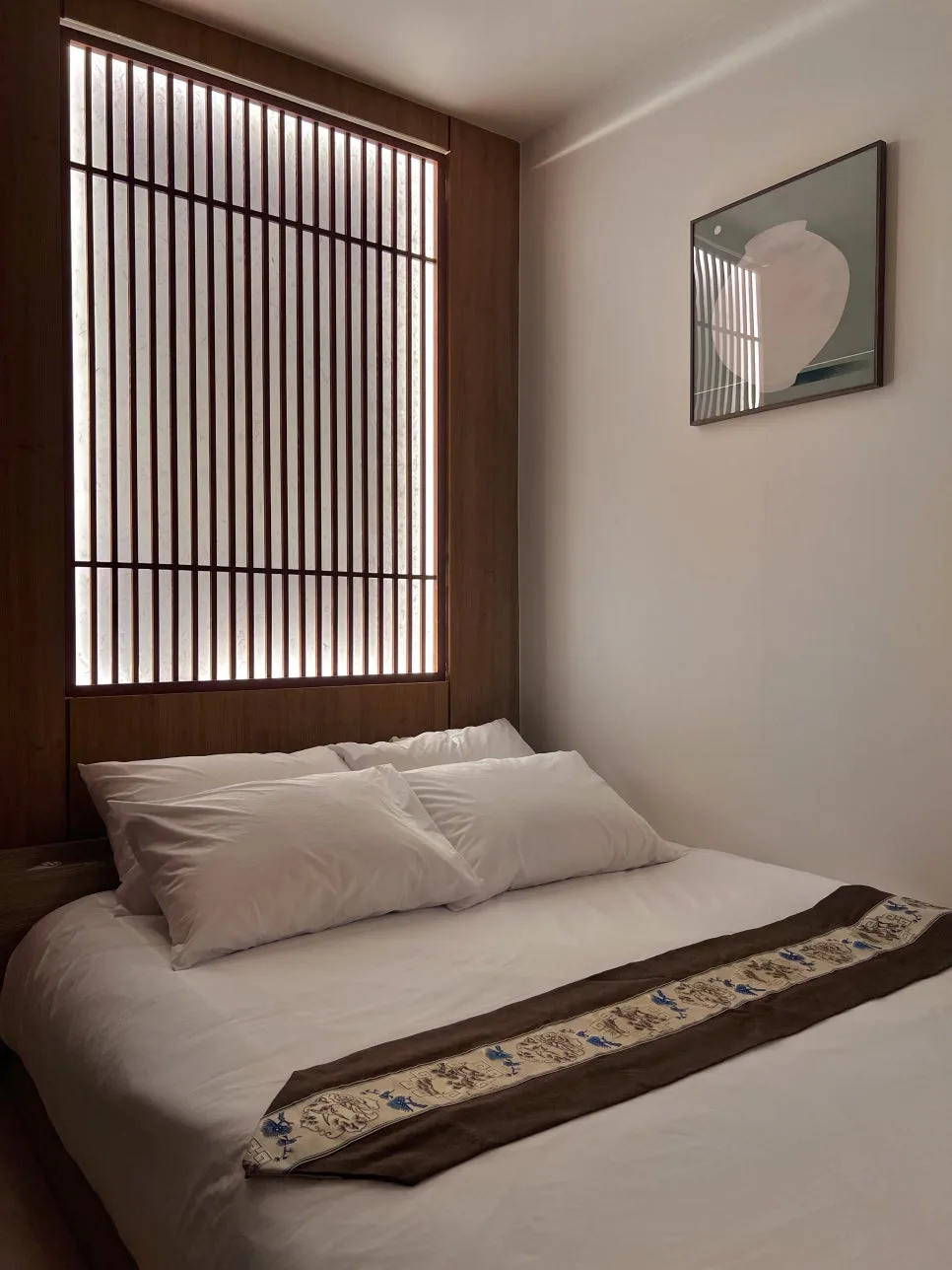
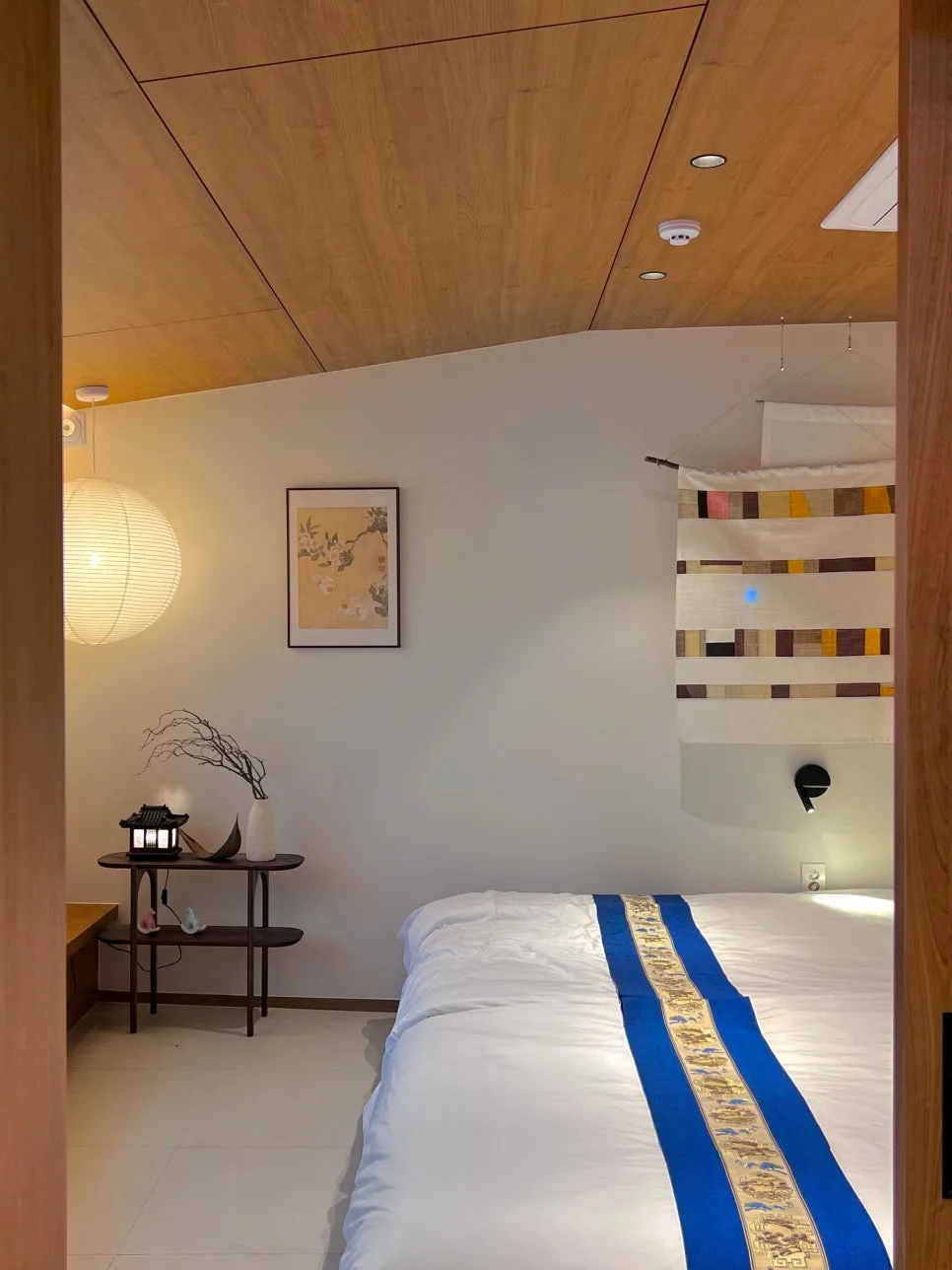
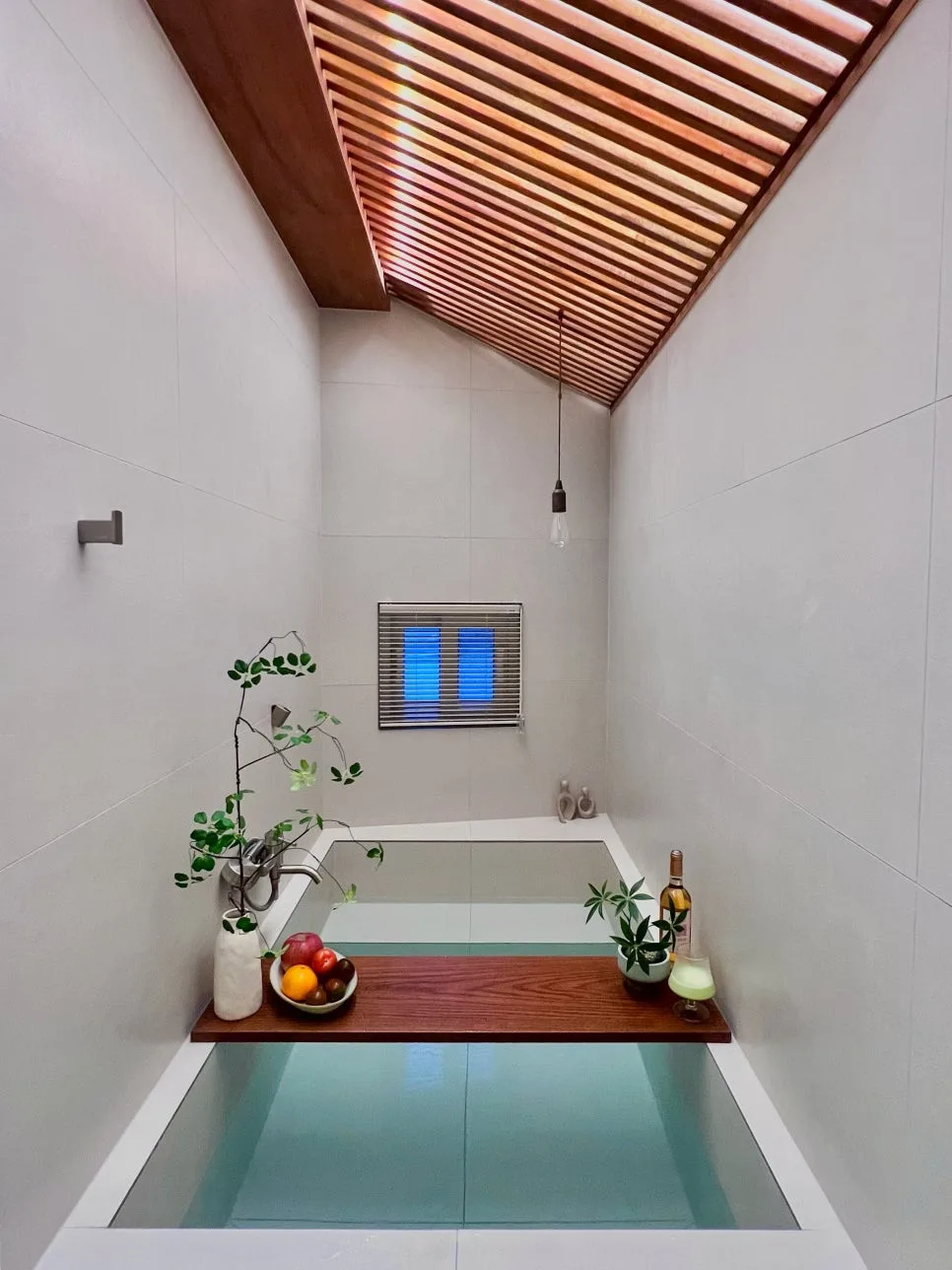


— from Yeonondam Gwangalli Beach Branch
#busanmarketfood #busanfood #musteatbusan #busantraditionalmarkets #busanmarkettrip #jagalchimarket #gukjemarket #bupyeongkkangtongmarket #haeundaetraditionalmarket #bujeonmarket #millakhoetown #busanfishcake #multteok #ssiathotteok #bibimdangmyeon #naengchaejokbal #dwaejigukbap #busantravel #gwangalliaccommodation #yeonondam
Sources — Busan Tourism Portal guides to Gukje Market and Busan street food, Busan Tourism Portal food content on naengchae jokbal and market fried chicken at Bupyeong Market, and local food references from Busan Metropolitan City and the Busan Tourism Organization. Menus, prices, and opening hours may change depending on each market and vendor.