|
BUSAN TRAVEL MAP · 2026 The Complete 2026 Busan Travel Map A guide to all 16 districts and counties in Busan, South Korea—and where to go first if it’s your first trip Before you start listing attractions, it helps to understand the neighborhoods first. Once you do, planning your Busan itinerary gets a whole lot easier. |
When you start planning a trip to Busan, you run into surprisingly tricky questions pretty fast. How far apart are Gwangalli and Haeundae? Is Seomyeon on the beach? Are Gamcheon Culture Village and Songdo in the same area? Is Nampo close to Busan Station? And if Gijang is part of Busan, why does it feel so far away?
These place names are second nature if you live in Busan, but for first-time visitors, they can be genuinely confusing—especially for international travelers. On Google Maps, you might see Suyeong-gu; when booking a hotel, you’ll see Gwangalli; and in tourism materials, it may show up as Gwangan Beach.
So in this post, I’m not just listing tourist spots. I reorganized Busan’s 15 districts plus 1 countyfrom a traveler’s point of viewand broke it all down in a way that actually makes sense. I’ll walk you through what’s in each area and where you should start if this is your first time visiting Busan.
|
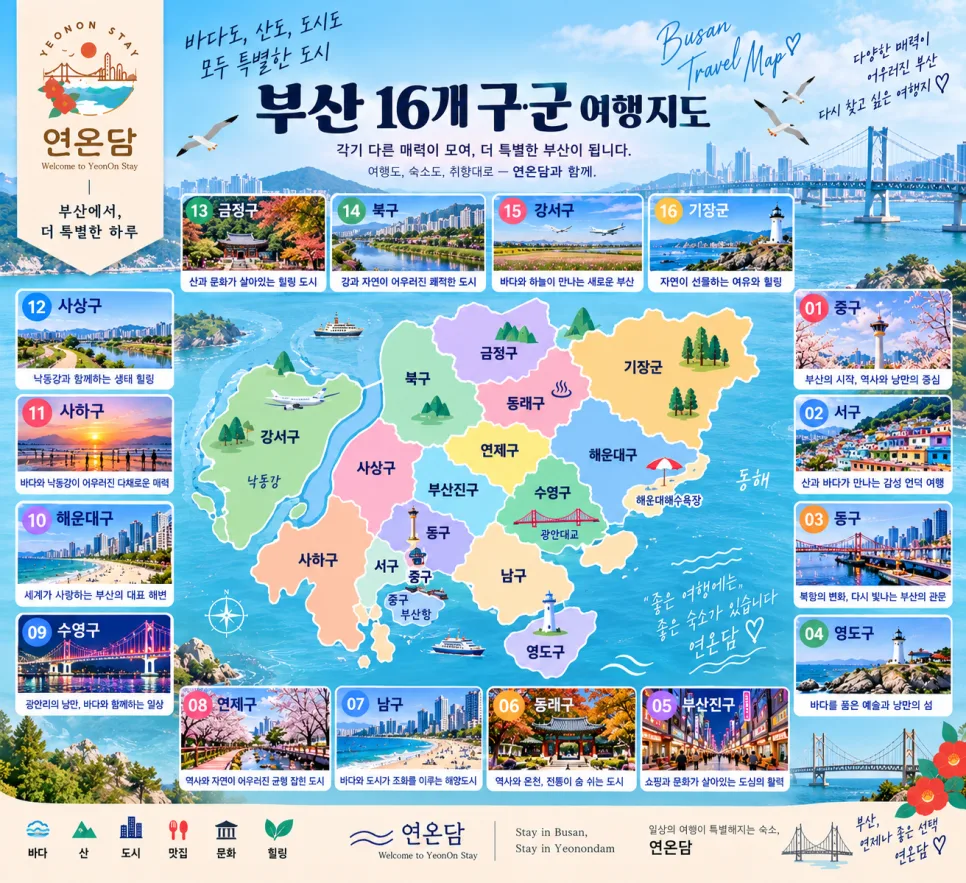
Busan is a much bigger city than most people expect. |
Busan is made up of 15 districts and 1 county, for a total of 16 administrative areas. What makes the city especially interesting is how different each area feels.
In Gwangalli and Haeundae, you get Busan at its most polished and beachy. In Yeongdo and Choryang, you find an older side of the city tucked between mountains and sea. Nampo is all about markets and street food, while Gijang opens up into temples, coastline, and forest. Out west in Dadaepo, you get sunsets where the Nakdong River meets the sea, and up north in Geumjeong, you’ll find Geumjeongsan and Beomeosa Temple.
That’s why, when planning a Busan travel guide, understanding the areas first makes building your route much easier than choosing attractions one by one.
|
If it’s your first time in Busan, remember just this first. |
You do not need to memorize all 16 areas right away. For a first trip, it’s enough to understand these 8 key areas.
|
Gwangalli |
Gwangan Bridge night views and the beach |
|
Haeundae |
Busan’s signature beach and modern tourist attractions |
|
Seomyeon · Jeonpo |
Shopping, great food, cafés, and the heart of the city |
|
Nampo |
The old downtown, including Jagalchi Market and Gukje Market |
|
Yeongdo |
Huinnyeoul Culture Village and Taejongdae |
|
Songdo |
A marine cable car and scenic coastal walks |
|
Gamcheon · Dadaepo |
A colorful culture village and some of Busan’s best sunsets |
|
Gijang |
Haedong Yonggungsa Temple, the sea, and nature |
Once you know these, the Busan travel guide map starts to feel much easier to read.
|
Busan’s 16 districts and county, seen through a traveler’s eyes |
|
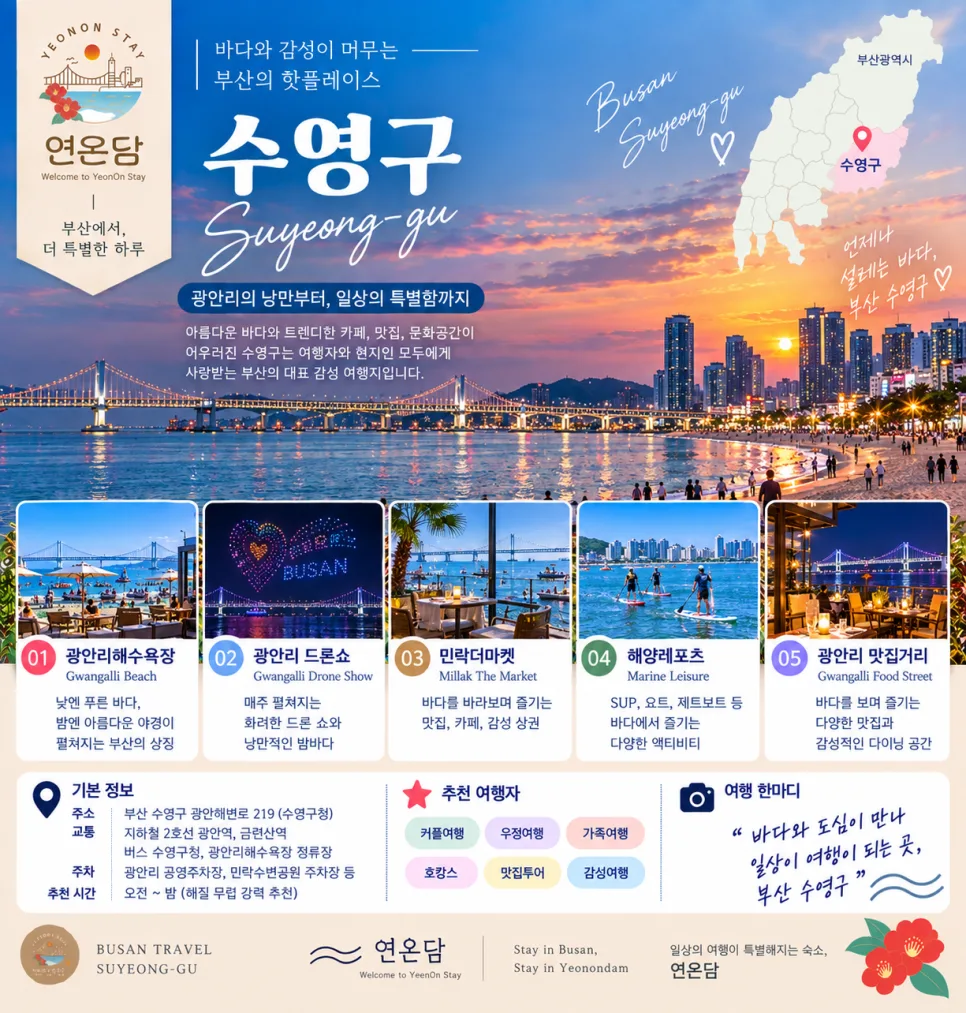
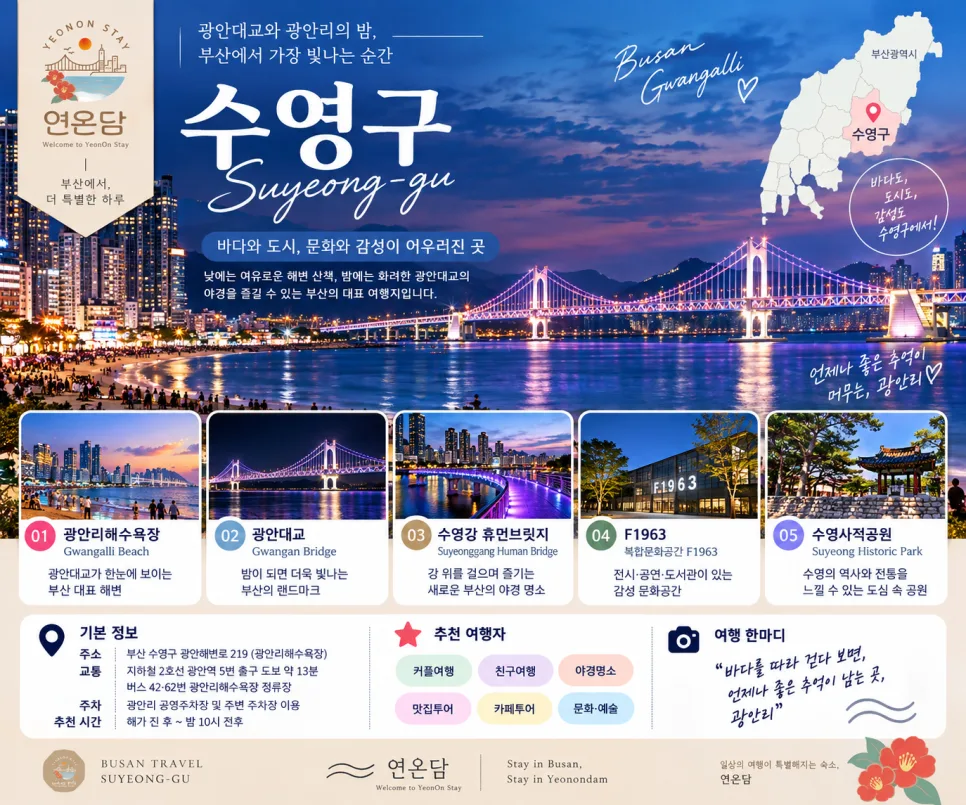
Suyeong-gu · Gwangalli Gwangalli In one line: the best area for Gwangan Bridge night views and enjoying Busan after dark Top attractions — Gwangalli Beach, Gwangan Bridge, Suyeong River Human Bridge, F1963, Suyeong Historic Park Gwangalli’s biggest draw is the view of Gwangan Bridge right from the beach. During the day, you can stroll along the water or café-hop, and once evening falls, the bridge lights up and the whole mood shifts. Lately, more travelers have been exploring the Suyeong River side too, and F1963—a former factory turned cultural complex—is a great place to see a different side of Busan. Best for couples, friend trips, night views, restaurants, cafés, and anyone who wants to enjoy Busan nightlife |
|
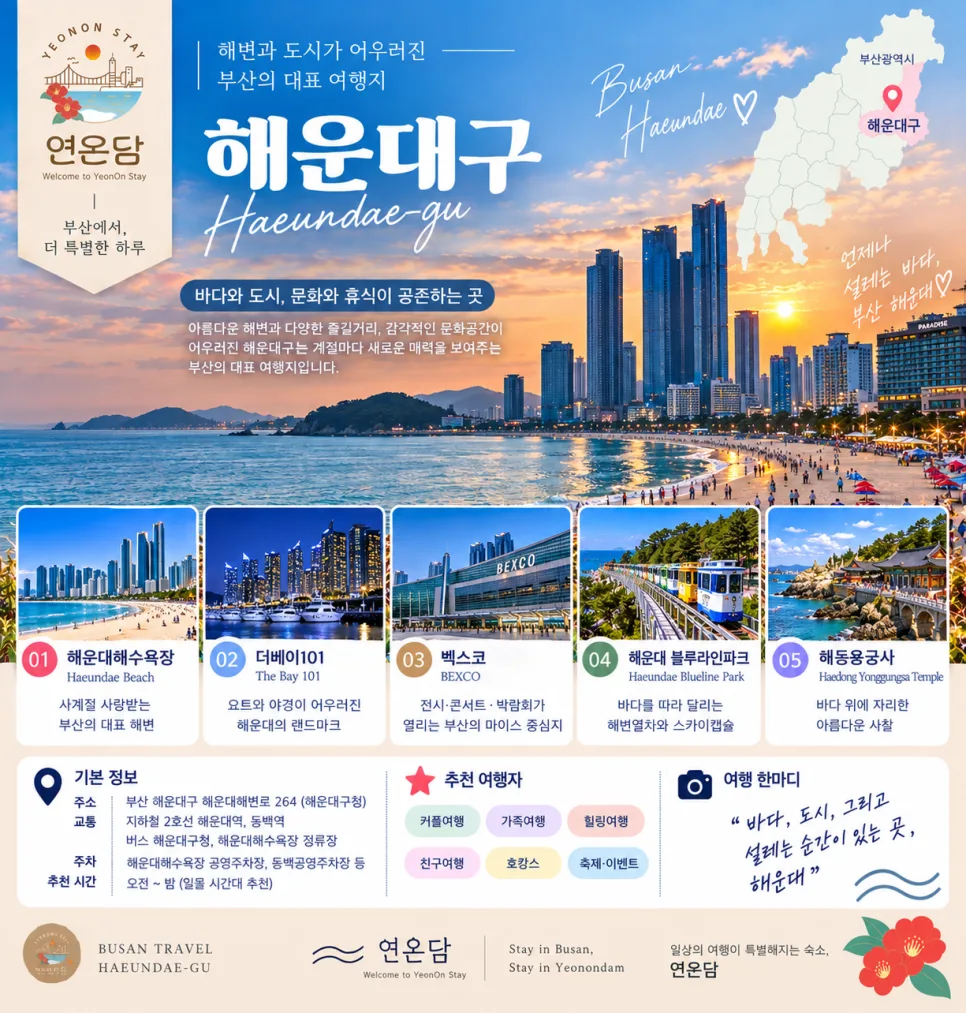
Haeundae-gu · Haeundae Haeundae In one line: the place that feels closest to the Busan most first-time visitors imagine Top attractions — Haeundae Beach, Haeundae Blueline Park, Cheongsapo, Dongbaekseom, BUSAN X the SKY Centered around Haeundae Beach, the coastline stretches through Dongbaekseom, Dalmaji-gil, and Cheongsapo. The Beach Train and Sky Capsule at Blueline Park are especially useful if you’re heading toward Cheongsapo or Songjeong, and if you want to see Busan from above, BUSAN X the SKY in the LCT Landmark Tower gives you sweeping views of Gwangan Bridge, Igidae, and Dongbaekseom. Best for first-time Busan trips, family travel, couples, the ocean, photos, and easy sightseeing |
|
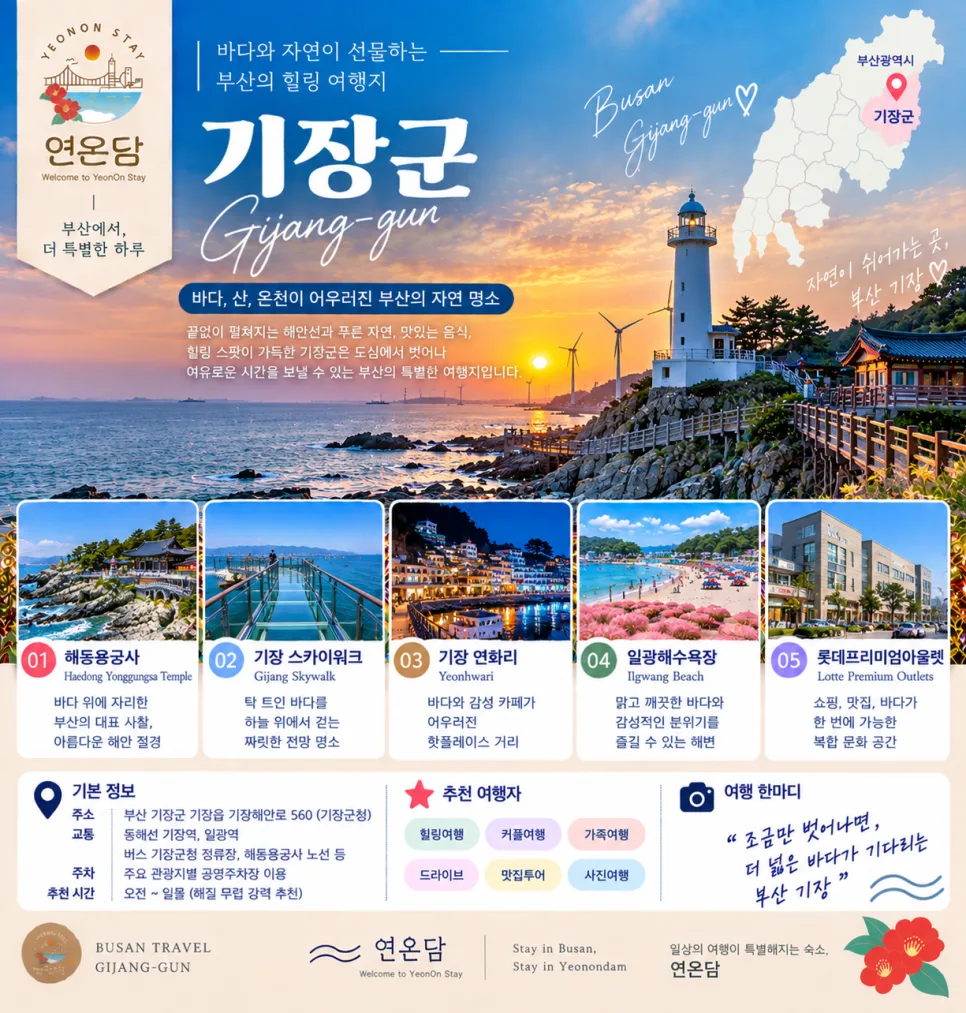
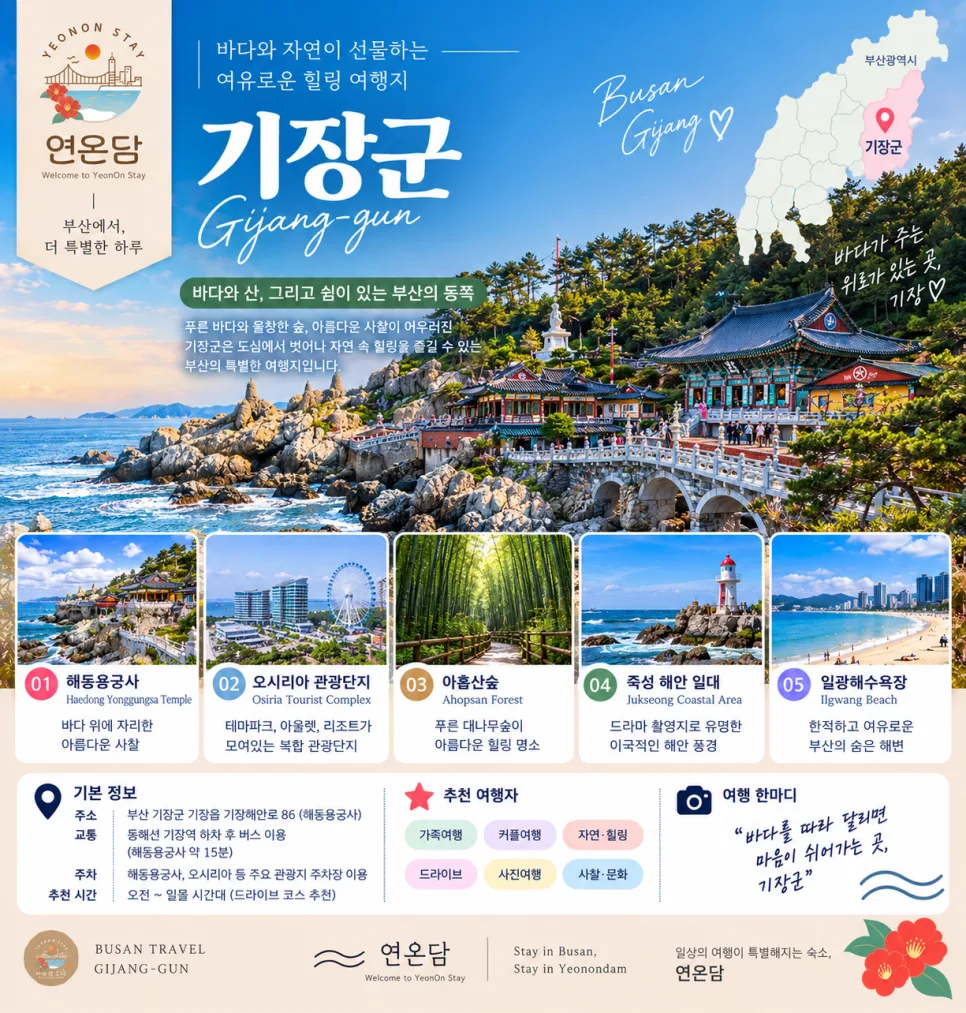
Gijang-gun · Gijang Gijang In one line: the side of Busan where you leave the city behind and meet the sea and nature Top attractions — Haedong Yonggungsa, Osiria Tourism Complex, Ahopsan Forest, Jukseong Coast, Ilgwang Beach This is Busan’s far eastern edge, so the vibe feels very different from Gwangalli or Seomyeon. It’s easy to build a route from the seaside Haedong Yonggungsa Temple through Osiria and along the Gijang coast, and if you’ve already been to Busan before, try expanding your trip to quieter spots like Ahopsan Forest or Ilgwang. Best for nature, scenic drives, families, temples, and travelers looking for a quieter side of Busan |
|
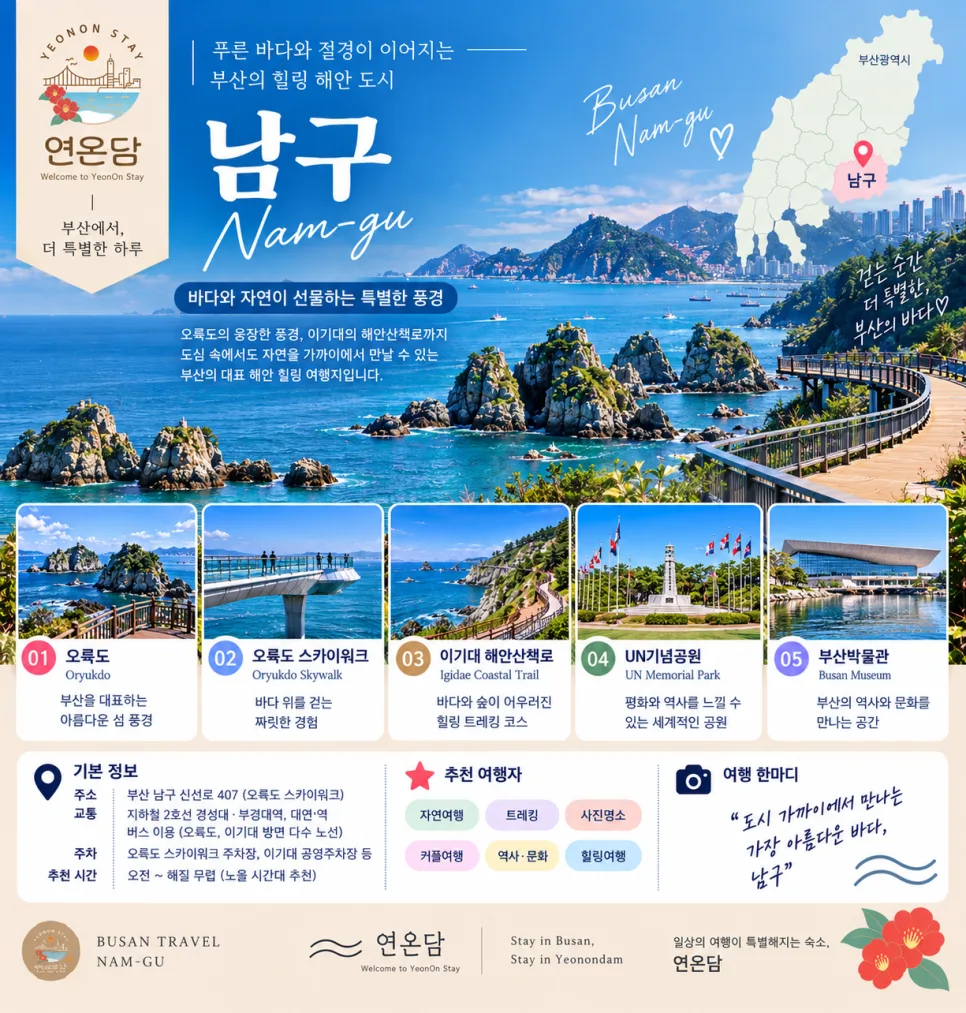
Nam-gu · Oryukdo · Igidae Oryukdo · Igidae In one line: one of the best places to experience Busan’s coastline on foot Top attractions — Oryukdo, Oryukdo Skywalk, Igidae Coastal Walk, UN Memorial Cemetery, Busan Museum If you prefer ocean views, cliffs, and coastal walks over flashy commercial attractions, Nam-gu is a great fit. Around Oryukdo and Igidae, you can really see Busan’s dramatic coastal geography up close. Best for trekking, nature, photography, history, and quieter travel |
|
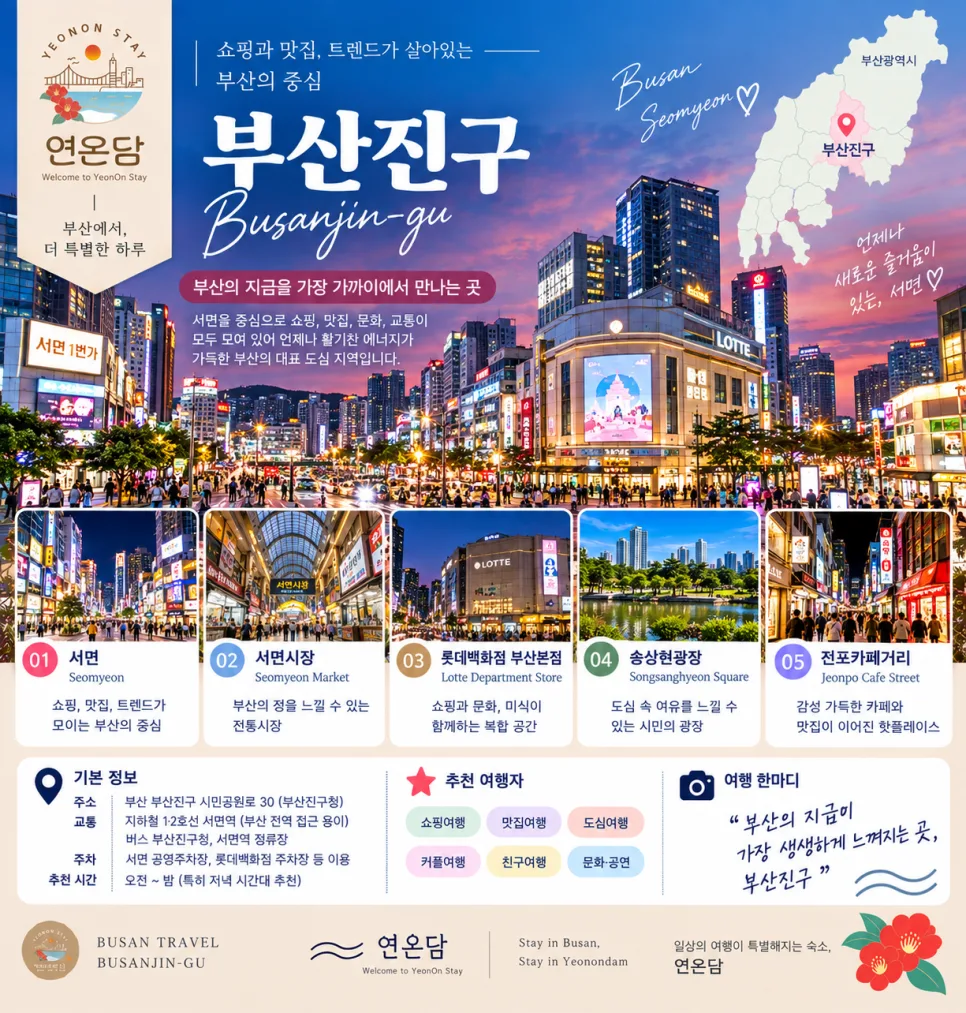
Busanjin-gu · Seomyeon · Jeonpo Seomyeon · Jeonpo In one line: the place to shop, eat, and go out in the center of Busan Key areas — Seomyeon, Jeonpo Cafe Street, Jeonpo Tool Street, Busan Citizens Park This is one of the areas that confuses international travelers the most. Seomyeon is not by the beach. Instead, it’s Busan’s central commercial district where Subway Lines 1 and 2 meet, making it easy to get around the city by public transportation. Jeonpo, meanwhile, is packed with cafés and small independent shops, which is why so many younger travelers love it. Best for shopping, cafés, restaurants, nightlife, and public transit-based travel |
|
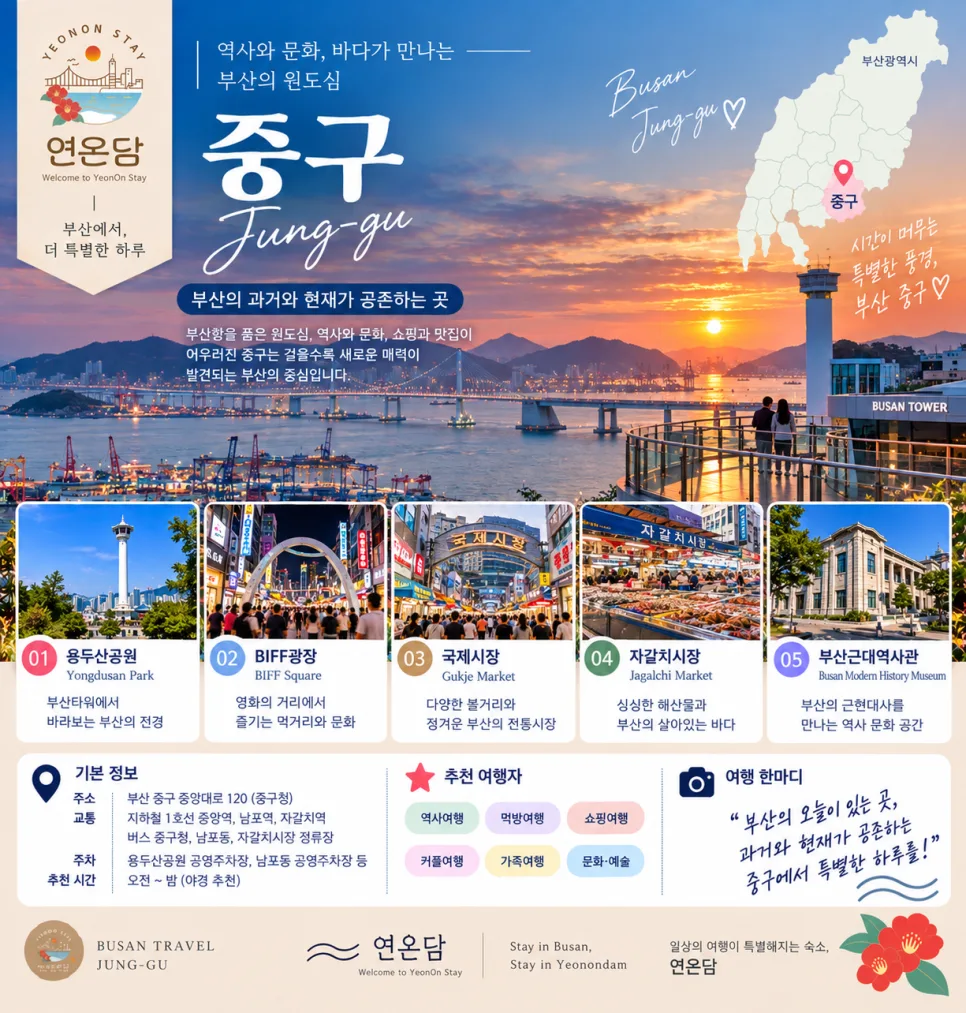
Jung-gu · Nampo Nampo In one line: old Busan at its most flavorful, with markets and street food everywhere Top attractions — Jagalchi Market, Gukje Market, BIFF Square, Bupyeong Kkangtong Market, Yongdusan Park · Busan Tower If you want to experience Busan’s classic food scene and traditional markets, this area is hard to skip. From Jagalchi Market to BIFF Square, Gukje Market, and Bupyeong Kkangtong Market, everything connects easily on foot, which makes this one of the best walkable areas in the city. Best for food, markets, first-time Busan trips, old downtown, and shopping |
|
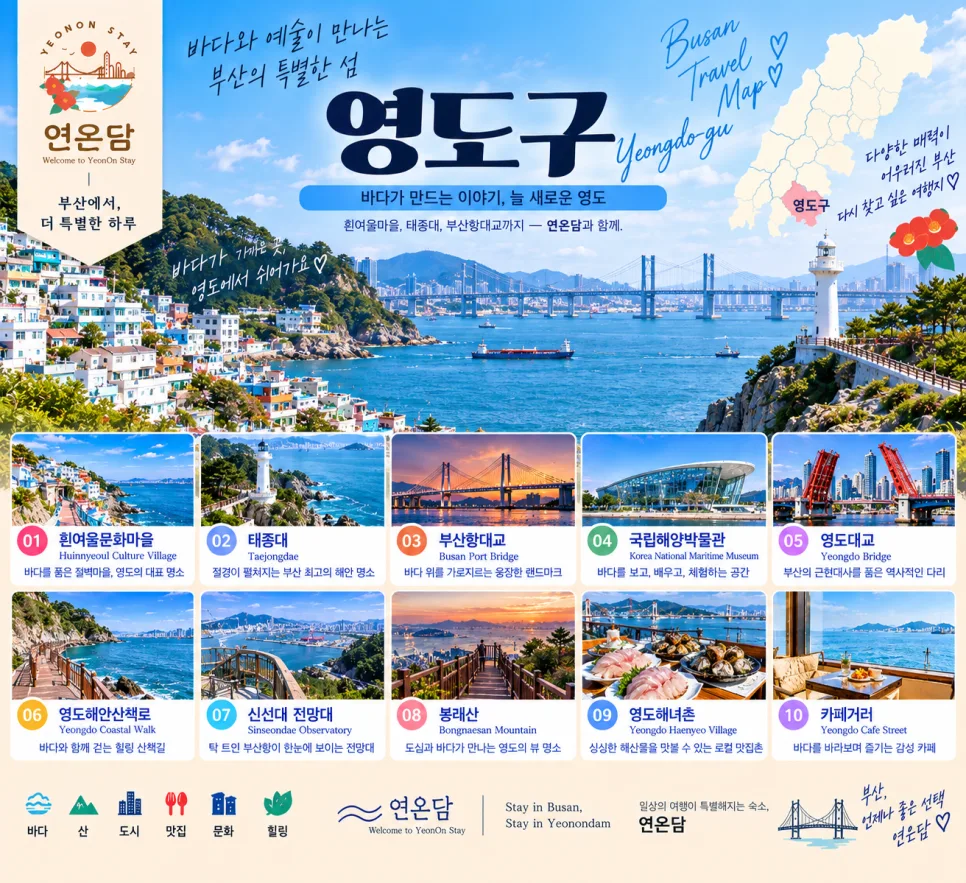
Yeongdo-gu · Yeongdo Yeongdo In one line: an island where Busan’s sea views and old alleyways come together Top attractions — Huinnyeoul Culture Village, Taejongdae, Jeoryeong Coastal Trail, National Maritime Museum, Bongnaesan Yeongdo has one of the most distinctive atmospheres in Busan. Huinnyeoul Culture Village, with its houses lined along the cliffs, and Taejongdae, with its rugged coastal scenery, are especially famous. If you love cafés and ocean views, Yeongdo easily works as a full-day itinerary on its own. Best for photography, alleyways, the sea, cafés, and repeat visits to Busan |
|
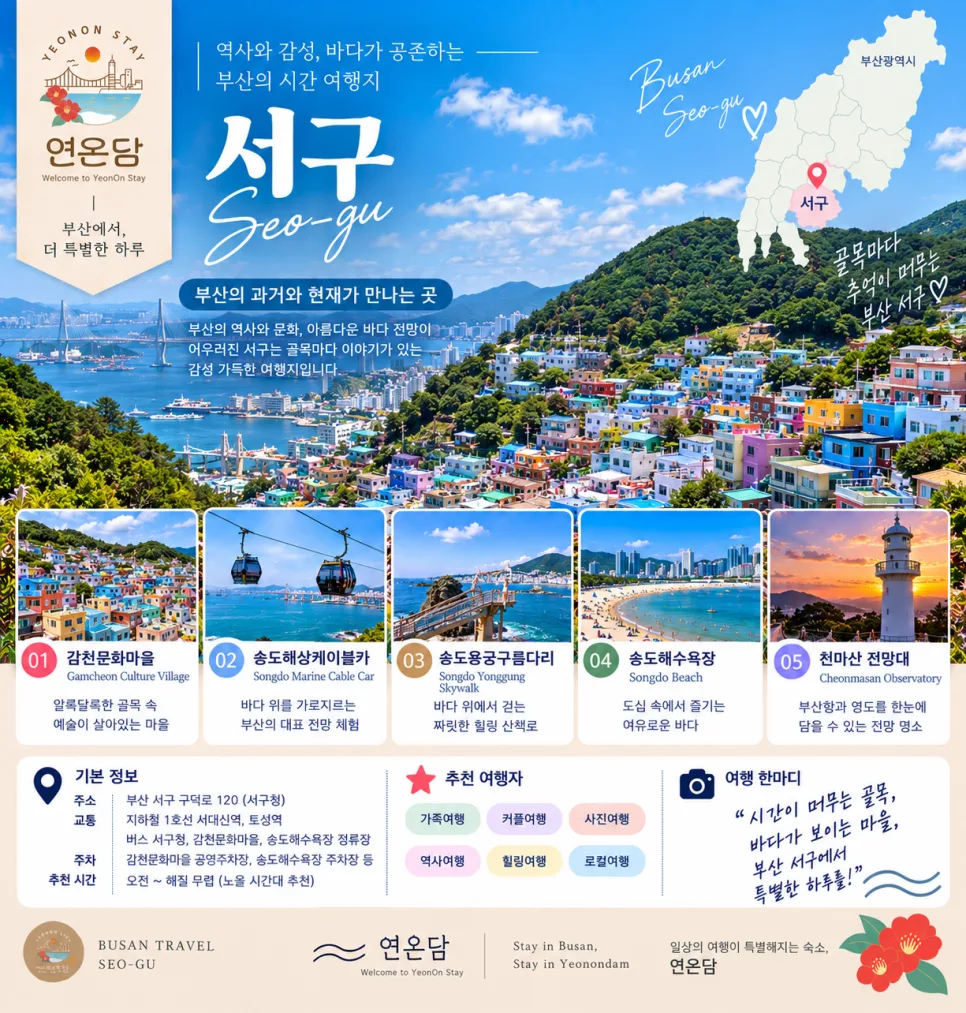
Seo-gu · Songdo Songdo In one line: the part of Busan where you cross over the sea Top attractions — Songdo Beach, Songdo Marine Cable Car, Songdo Yonggung Suspension Bridge, Amnam Park One of Songdo’s biggest strengths is how connected everything is. You can start at the beach, ride the cable car over the water, and continue on to Amnam Park and the Songdo Yonggung Suspension Bridge. Visit Busan also introduces this whole area as a single coastal walking route. Best for families, couples, cable cars, ocean views, and photos |
|
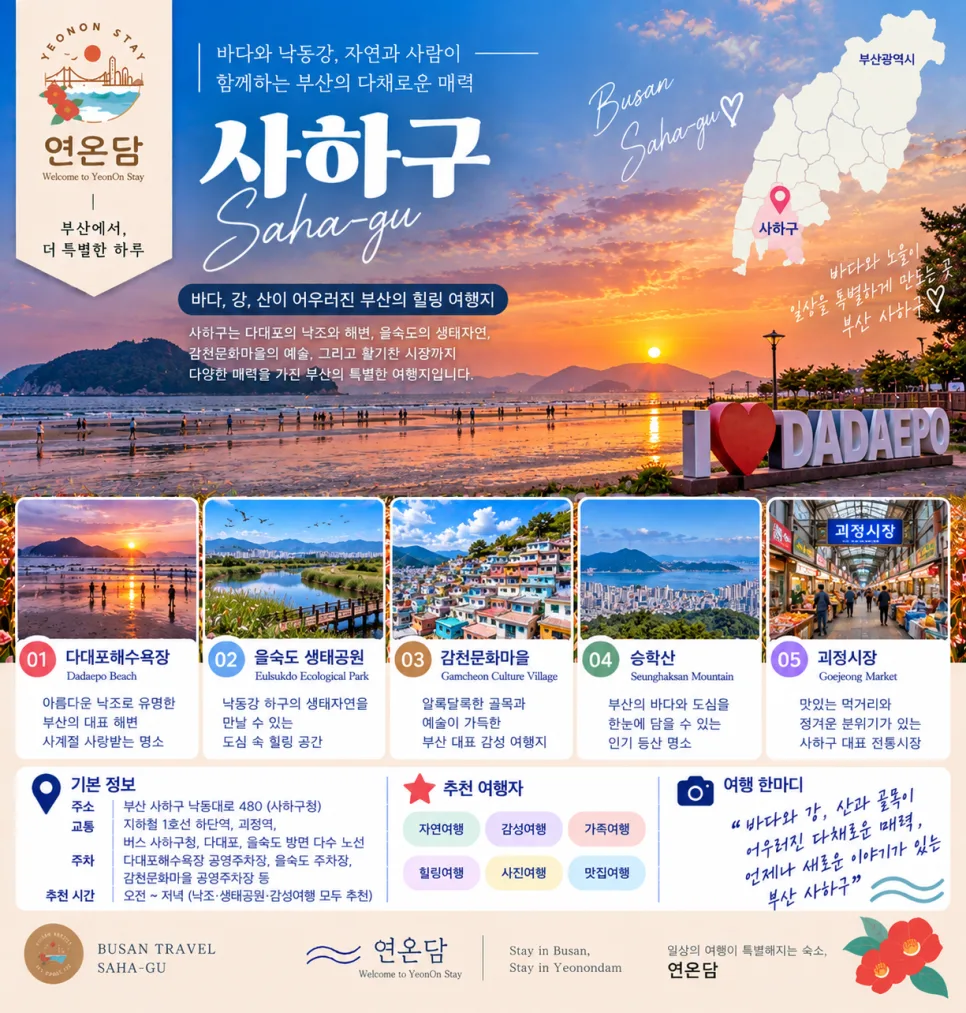
Saha-gu · Gamcheon · Dadaepo Gamcheon · Dadaepo In one line: Gamcheon by day, Dadaepo by evening Top attractions — Gamcheon Culture Village, Dadaepo Beach, Molundae, Eulsukdo, Amisan Observatory It would be a shame to visit this area and only see Gamcheon Culture Village. If you have enough time, explore Gamcheon first, then head to Dadaepo. If eastern Busan is all about sunrise and polished beach-city energy, Dadaepo offers something completely different: a broad beach and sunset views over the Nakdong River estuary. Best for sunsets, photography, ecology, culture villages, and repeat visits |
|
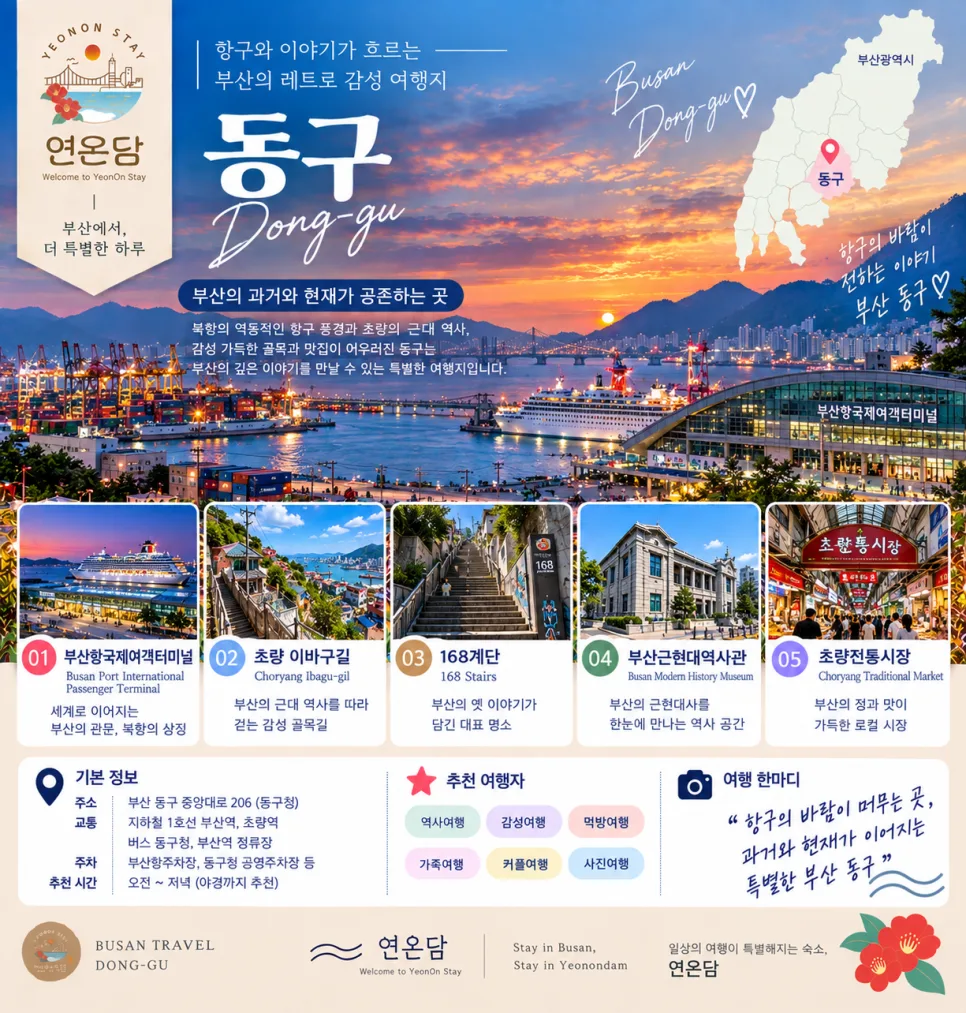
Dong-gu · Busan Station · Choryang Busan Station · Choryang In one line: the historic face of Busan that greets you when you arrive Key sightseeing points — Busan Station, Choryang Ibagu-gil, the 168 Stairs area, Busan North Port Waterfront Park If you arrive in Busan by KTX, this is the first area you’ll see—but it’s more than just a transit hub. Along the hillside roads and Choryang’s alleys, you can glimpse the older port city that Busan grew from, while the waterfront shows the city’s newer transformation around North Port. Best for KTX trips, history, alleys, hillside roads, and old downtown Busan |
|
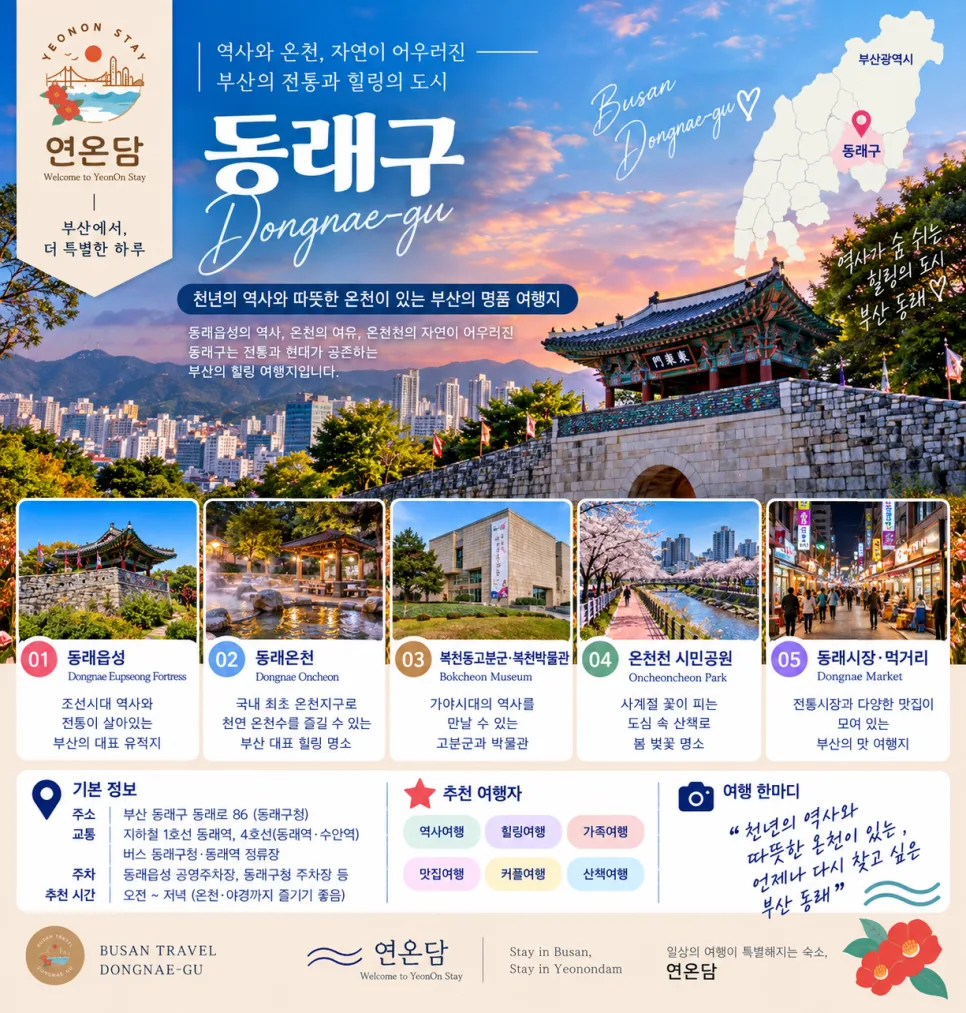
Dongnae-gu · Dongnae Dongnae In one line: where you meet the Busan that existed before the beaches became the headline Top attractions — Dongnae Eupseong Fortress, Bokcheon-dong Tombs, Bokcheon Museum, Dongnae Hot Springs, Oncheoncheon Stream If you think of Busan as only a beach city, Dongnae shows you something different. With its long history and hot spring culture, it’s a meaningful stop for travelers interested in Busan’s past. Best for history, hot springs, walks, and repeat visits to Busan |
|
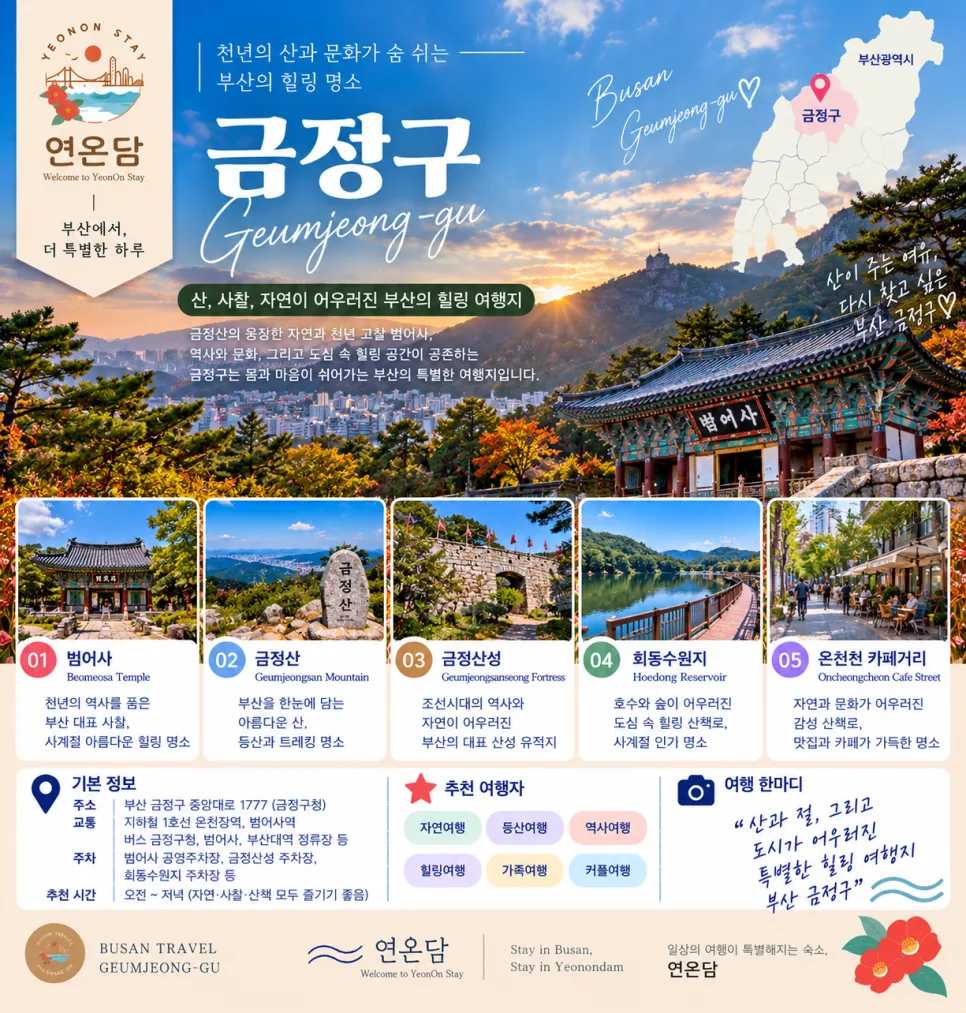
Geumjeong-gu · Geumjeongsan Geumjeongsan In one line: the side of Busan you meet in the mountains and at the temples Top attractions — Beomeosa Temple, Geumjeongsan, Geumjeong Fortress, Hoedong Reservoir area This is a great area when you want a break from beaches and downtown sightseeing and feel like walking in nature. Visiting Beomeosa Temple and Geumjeongsan together makes it clear that Busan is not just a marine city—it’s also a city wrapped in mountains. Best for hiking, temples, nature, and history |
|
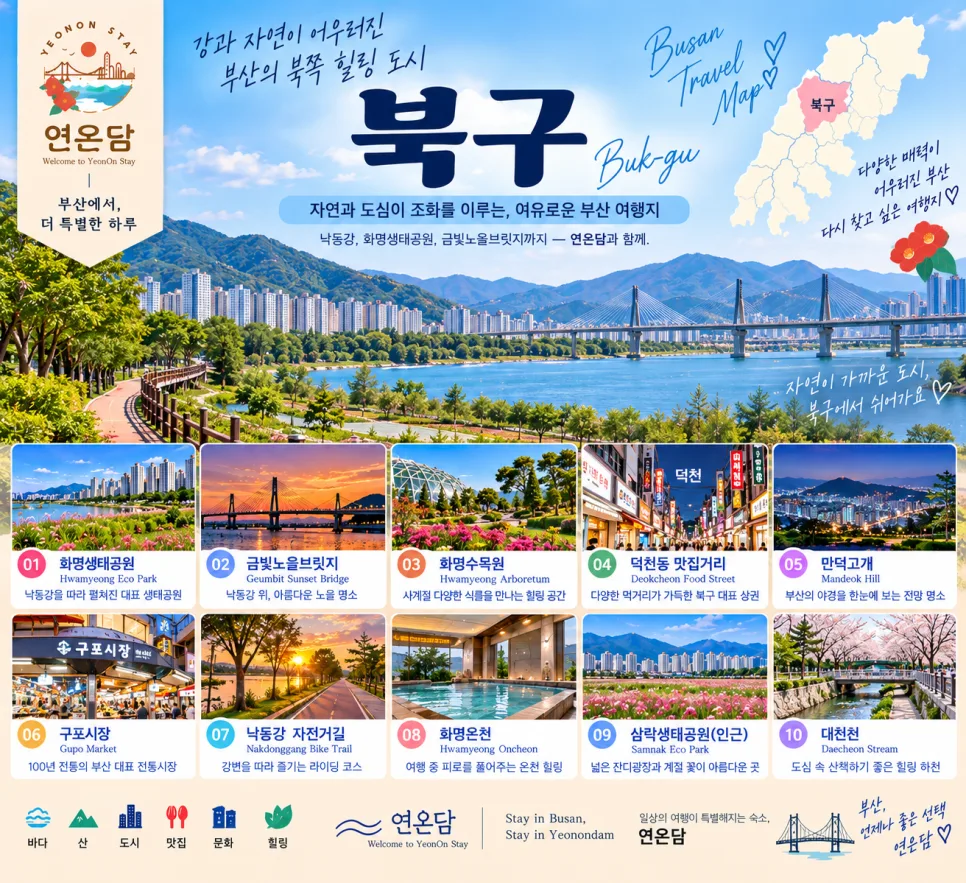
Buk-gu · Gupo · Hwamyeong Gupo · Hwamyeong In one line: the side of Busan where you meet the Nakdong River and sunset views Top attractions — Hwamyeong Ecological Park, Geumbit Noeul Bridge, Gamdong Narutgil Riverwalk, Gupo Market This usually isn’t the first area people visit on a first trip, but it’s worth a look if you’re coming back to Busan. Geumbit Noeul Bridge in particular connects Gupo and Hwamyeong Ecological Park and is Busan’s longest pedestrian bridge at 382 metersand is officially introduced by Busan City together with the nearby Gamdong Narutgil Riverwalk as a great place to catch Nakdong River sunsets and night views. Best for sunsets, riverside walks, local markets, and repeat visits to Busan |
|
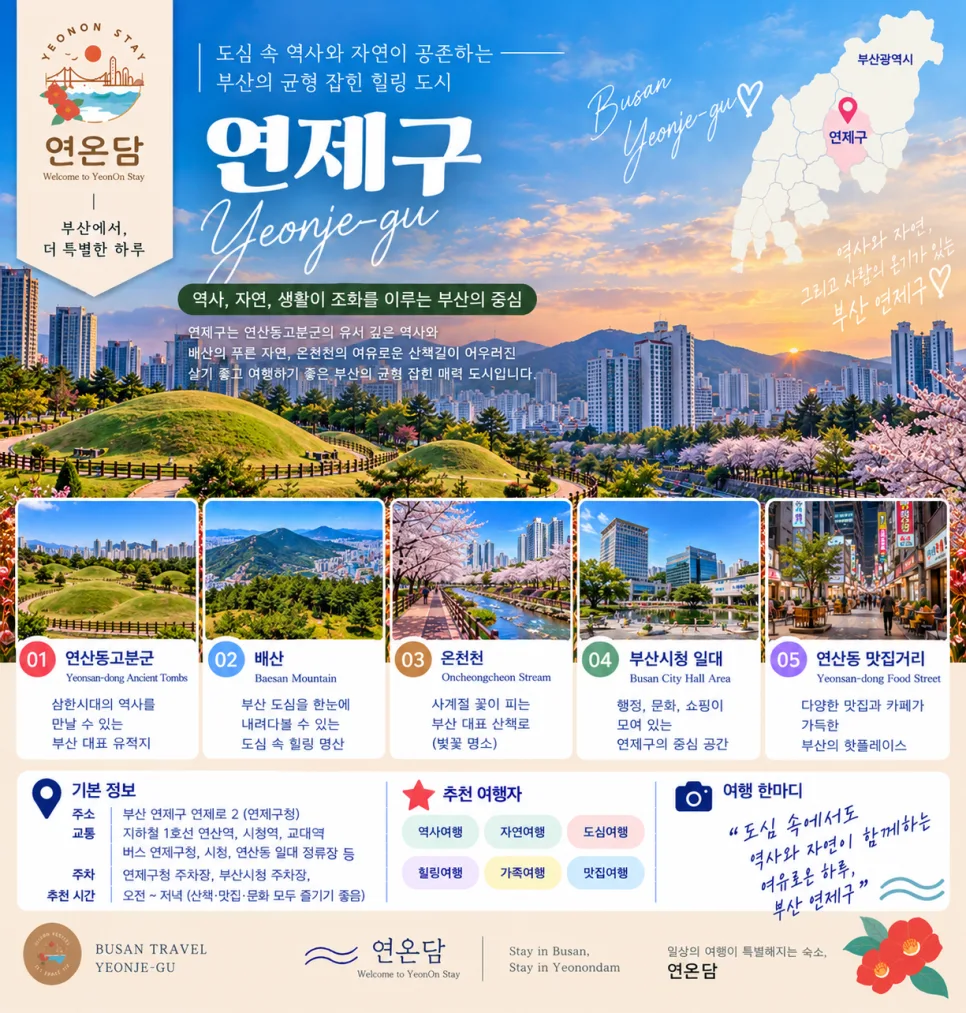
Yeonje-gu · Yeonsan · Baesan Yeonsan · Baesan In one line: an area that feels closer to everyday local life than major sightseeing Key points — Yeonsan-dong Tombs, Baesan, Oncheoncheon Stream, Busan City Hall area Rather than being a must for a first trip, this area is better suited to travelers interested in history and local walks. Compared with Busan’s tourist-heavy zones, this is a much more everyday version of the city. Best for local vibes, walks, history, and repeat visits to Busan |
|
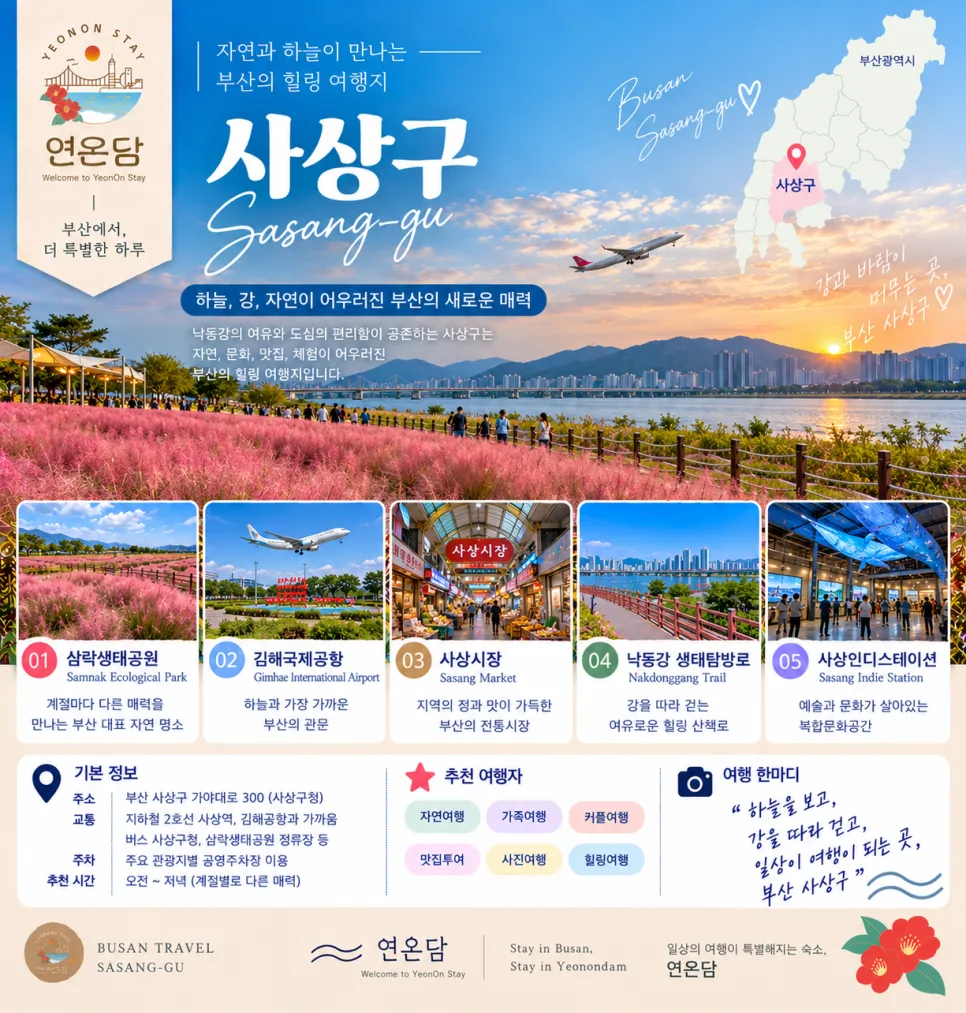
Sasang-gu · Sasang · Samnak Sasang · Samnak In one line: western Busan unfolding along the Nakdong River Key points — Samnak Ecological Park, the Nakdong riverside, Sasang Life History Museum, the Sasang area This is one of the main transit zones you pass through when coming from Gimhae Airport into central Busan. Samnak Ecological Park in particular is great for wide-open river scenery and shows a very different side of Busan from the city’s better-known tourist districts. Best for nature, running, biking, local vibes, and the Nakdong River |
|
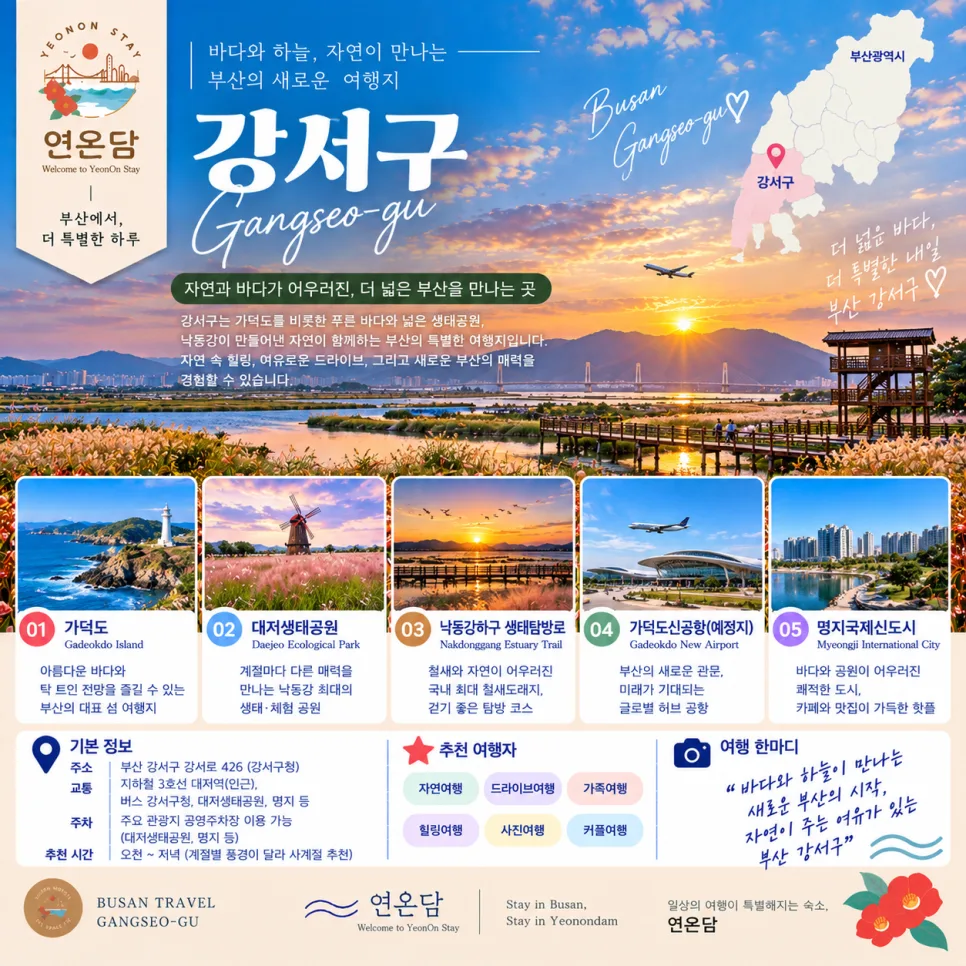
Gangseo-gu · Gadeokdo · Myeongji Gadeokdo · Myeongji In one line: islands and the Nakdong River at the far western edge of Busan Top travel spots — Gadeokdo, Daejeo Ecological Park, the Nakdong Estuary ecosystem area, the Myeongji area This area feels very different from central Busan sightseeing. With places like the Gadeokdo coastline and the Nakdong estuary wetlands, it’s best for nature-focused travel and is especially interesting for people who have already visited Busan several times. Best for islands, nature, scenic drives, ecology, and repeat visits to Busan |
|
If it’s your first time in Busan, where should you start? |
|
For your first Busan trip, Gwangalli · Haeundae · Nampo · Yeongdo · Seomyeon · Jeonpo and then add either Gijang or Songdo · Gamcheon depending on how much time you have. |
|
If it’s your second trip to Busan, try expanding to Dadaepo · Oryukdo · Igidae · Dongnae · Geumjeongsan for a wider look at the city. |
|
If you’ve already been several times, Gupo · Hwamyeong · Samnak · Gadeokdo · Yeonsan · Baesan can give you a more local, less obvious side of Busan centered around the Nakdong River. |
|
Grouping Busan by area makes the trip much easier. |
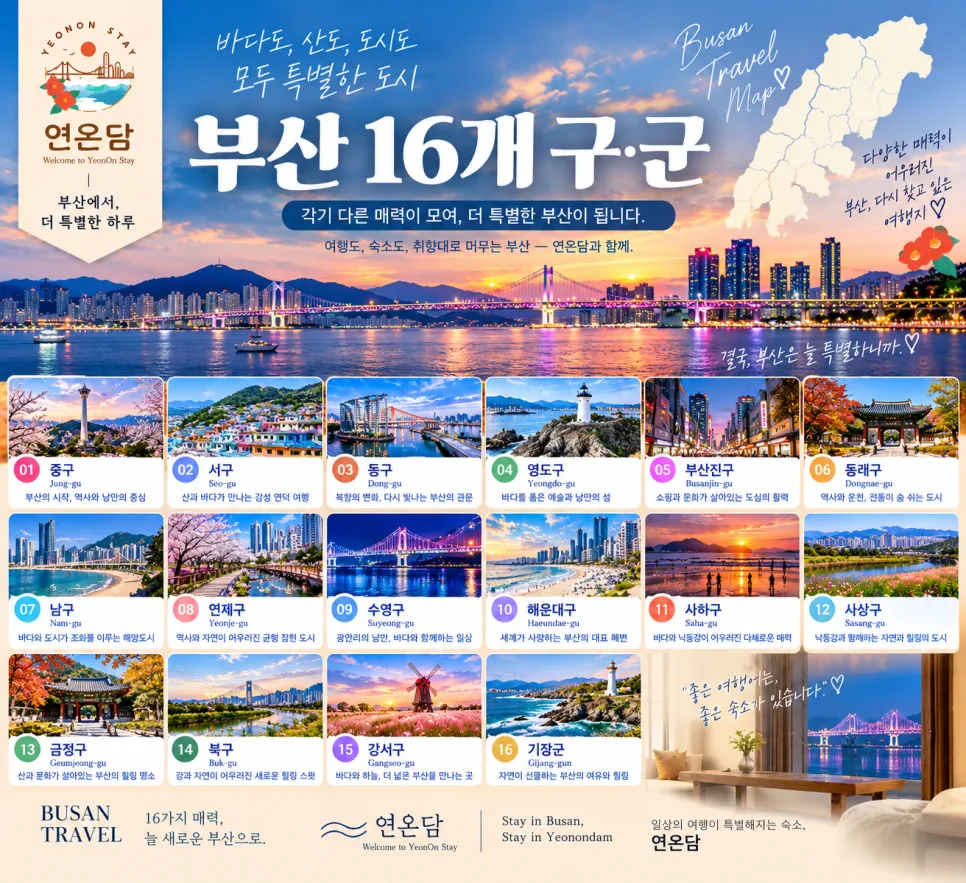
Instead of pinning attractions one by one and zigzagging across the city, group them by zone to cut down on long east-west backtracking.
|
East Busan coastal route |
Gijang · Cheongsapo · Haeundae |
|
Gwangalli coastal route |
Gwangalli · Igidae · Oryukdo |
|
Central Busan city route |
Seomyeon · Jeonpo · Gwangalli |
|
Old downtown route |
Busan Station · Choryang · Nampo · Yeongdo |
|
West Busan coastal route |
Songdo · Gamcheon Culture Village · Dadaepo |
|
History and nature route |
Dongnae · Beomeosa Temple · Geumjeongsan |
|
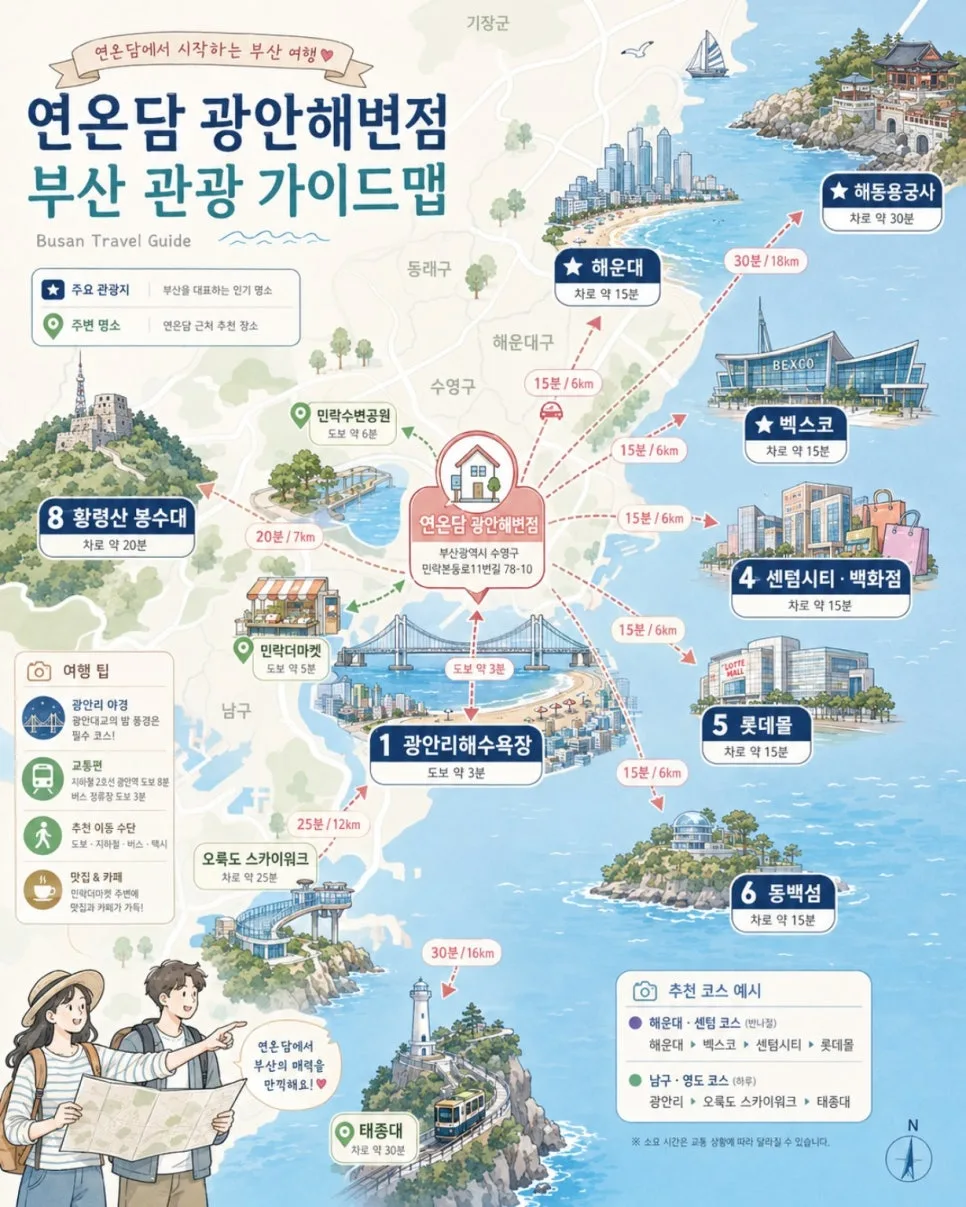
Where should you stay in Busan? |
|
Haeundae |
Best if your trip is focused on eastern Busan, including Haeundae, Cheongsapo, and Gijang |
|
Seomyeon |
Best for subway access and shopping |
|
Nampo |
Best for old downtown Busan and western areas like Yeongdo, Songdo, and Gamcheon |
|
Gwangalli |
Best if you want to enjoy the beach and night views while traveling both eastern and western Busan |
Gwangalli is especially convenient because you can explore Busan during the day, then come back in the evening for Gwangan Bridge views and a walk by the sea.
|
Busan travel FAQ |
Based on attractions / Based on Yeonondam accommodations
|
Based on attractions |
|
Q. It’s my first time in Busan—do I need to visit all 16 districts and county? No. On a 2-night, 3-day trip, you can already have a very full and satisfying Busan travel guide experience with just Gwangalli, Haeundae, Nampo, Yeongdo, and Seomyeon. |
|
Based on attractions |
|
Q. Are Gwangalli and Haeundae the same place? No. Gwangalli is in Suyeong-gu, while Haeundae is in Haeundae-gu. They are different beaches, and the atmosphere around each one is different too. |
|
Based on attractions |
|
Q. Are Gamcheon Culture Village and Songdo in the same area? They’re close, but they’re in different administrative districts. Gamcheon Culture Village is in Saha-gu, while Songdo Beach is in Seo-gu. That’s exactly why they pair so well as a one-day route. |
|
Based on attractions |
|
Q. Between Busan Station and Seomyeon, which one is the center of Busan? They play different roles. Busan Station is the gateway for KTX and the old downtown, while Seomyeon is the city’s central transit and commercial hub where Subway Lines 1 and 2 meet. |
|
Based on attractions |
|
Q. Where are the best sunset spots in Busan? Dadaepo and Amisan Observatory are the classic picks. If you want something more local, check out Geumbit Noeul Bridge and the Hwamyeong Ecological Park area along the Nakdong River. |
|
Based on Yeonondam accommodations |
|
Q. If I want to explore all over Busan, is Gwangalli a convenient place to stay? Yes. Gwangalli has great access to Subway Line 2, so it’s easy to reach Haeundae, Seomyeon, the Suyeong River area, and even the old downtown side of the city. You can spend the day exploring Busan, then end it with Gwangan Bridge at night and a walk by the sea. Yeonondam operates Gwangan Station Branchand Gwangalli Beach Branch two stays designed for different travel styles. |
|
A few things to check before your trip Opening hours, admission fees, and closure days for tourist facilities can change. This is especially true for cable cars, observatories, museums, and other paid attractions, so I recommend checking the official website right before your visit. Even within the Songdo area alone, places like Songdo Yonggung Suspension Bridge and the Songdo Marine Cable Car all have different hours and pricing. For official Busan tourism information, check the Visit Busan official tourism portal.You can find the latest details there. |
|
STAY IN GWANGALLI, BUSAN Busan is not a city you can sum up in just one image. Spend time by the sea in Haeundae and Gijang, walk through the urban neighborhoods of Seomyeon and Jeonpo, discover old Busan in Nampo and Yeongdo, and then wrap up the day in Gwangalli. If you want to use Gwangalli as your base while exploring all over Busan, Yeonondam operates two different stays designed around different travel styles. |

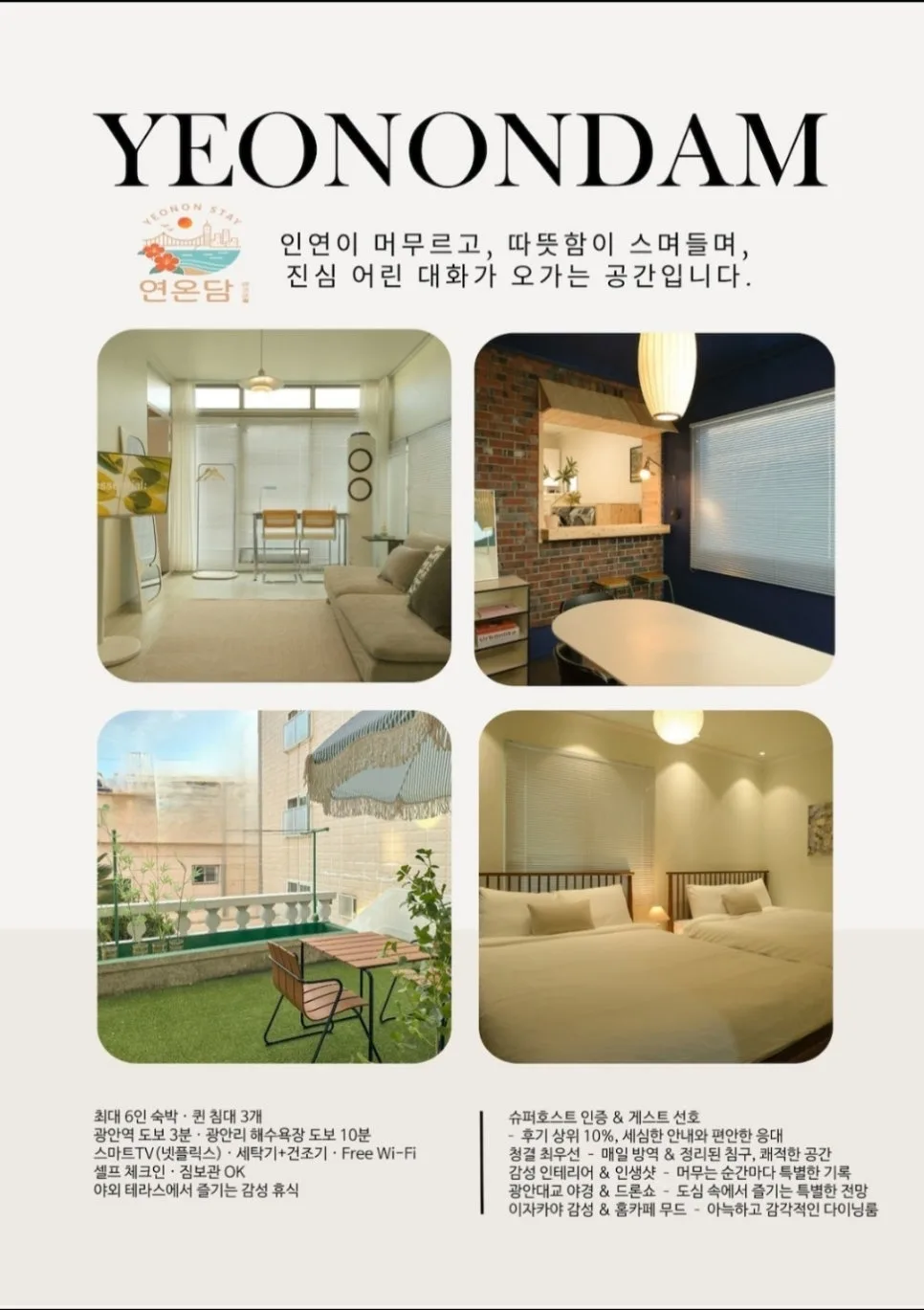
|
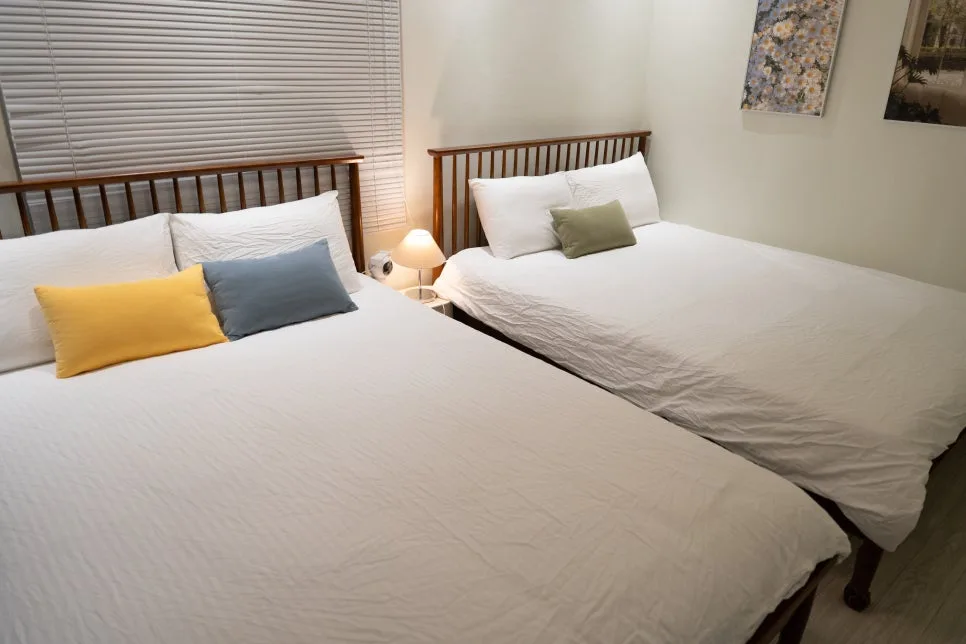
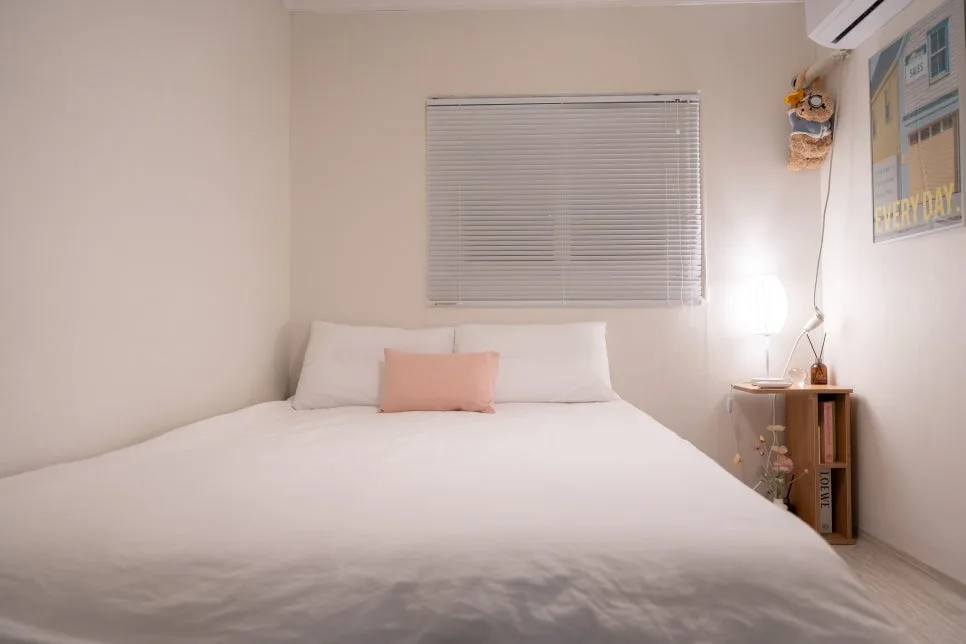
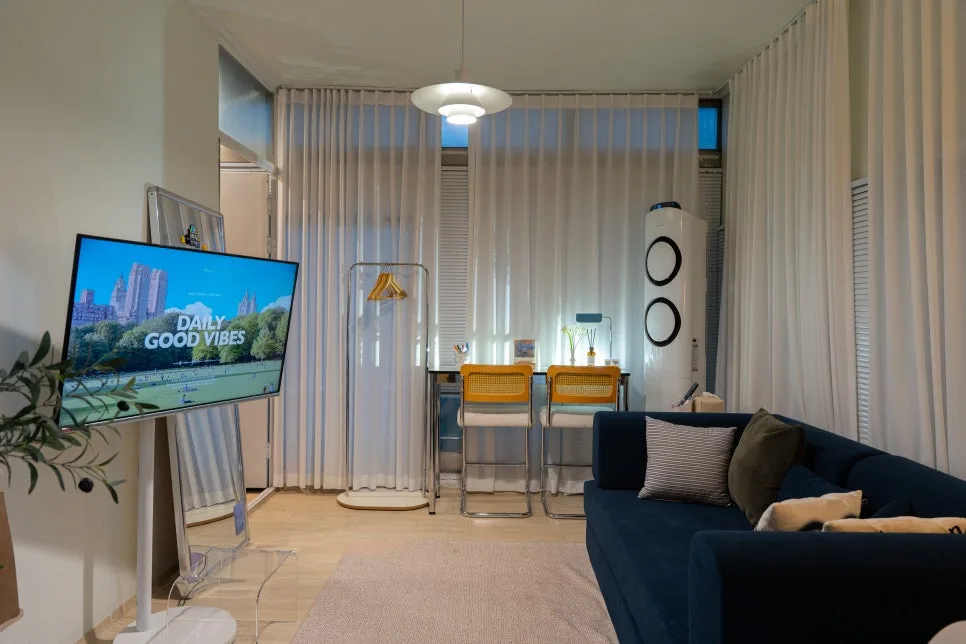
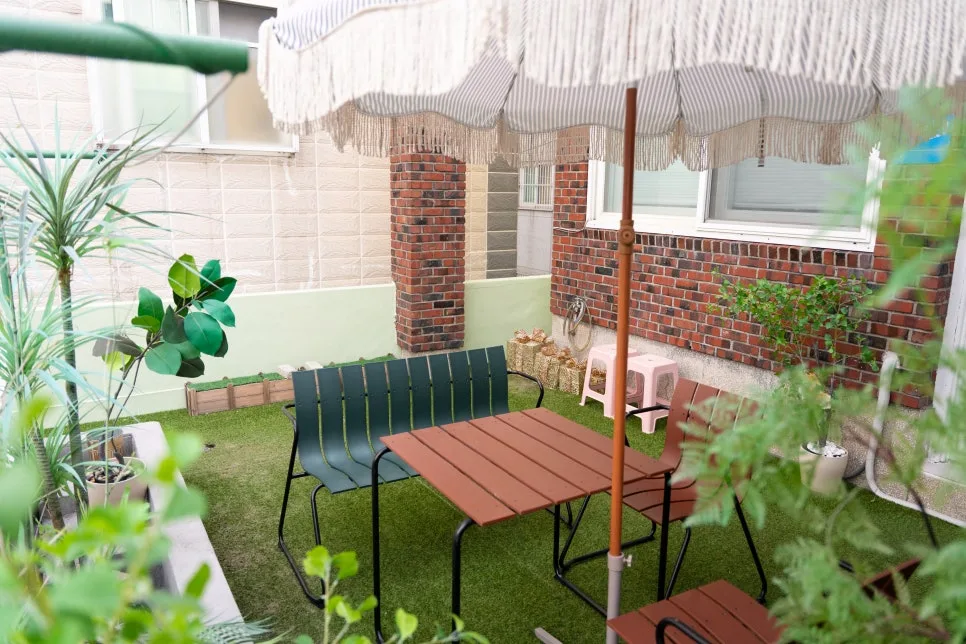
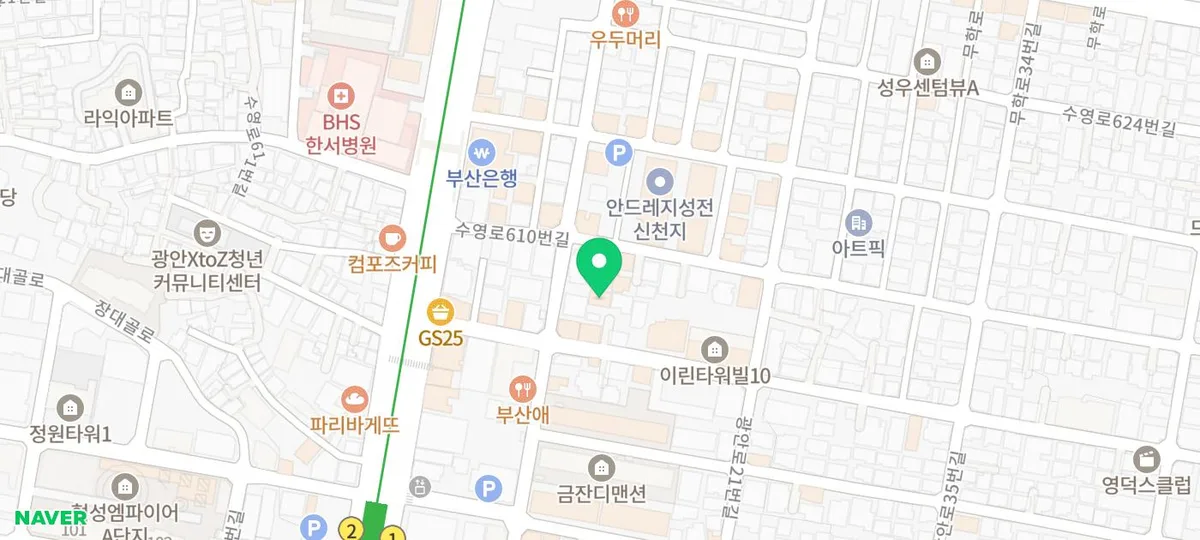
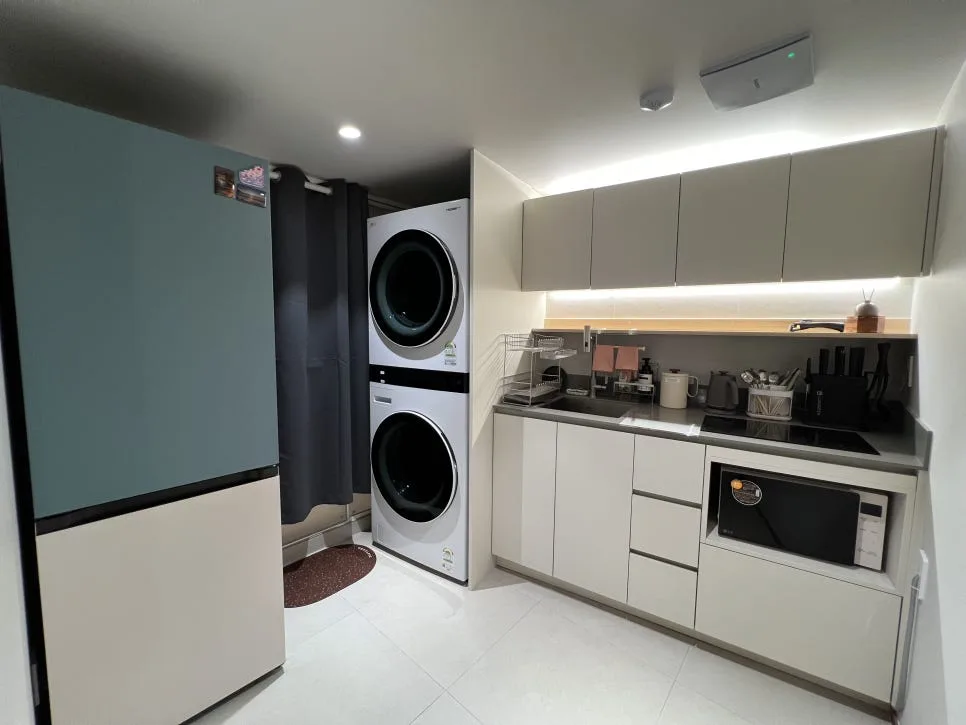
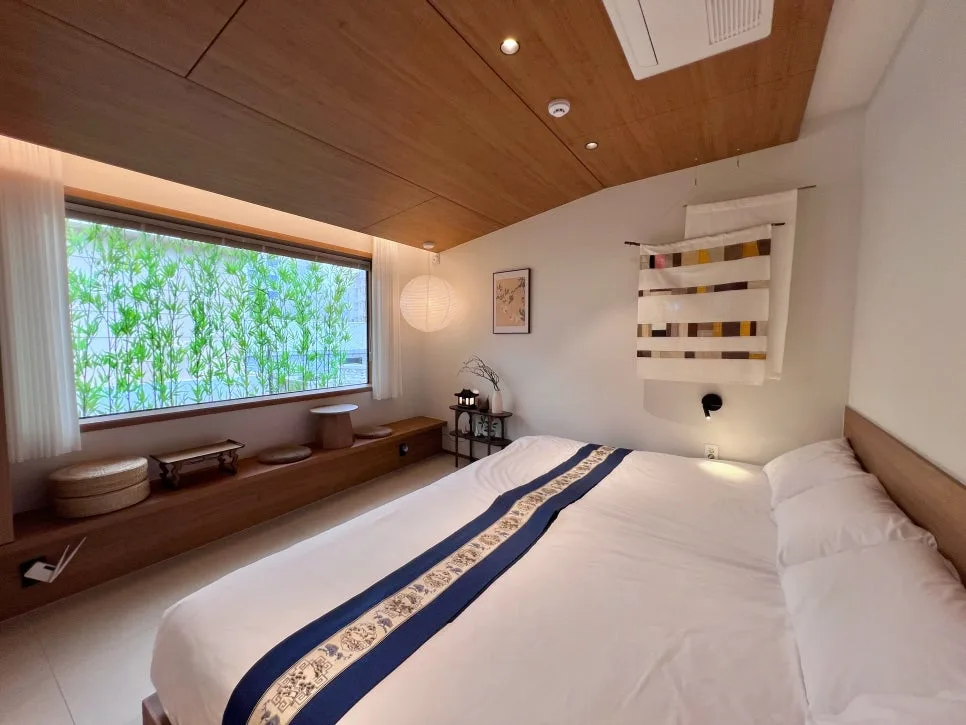
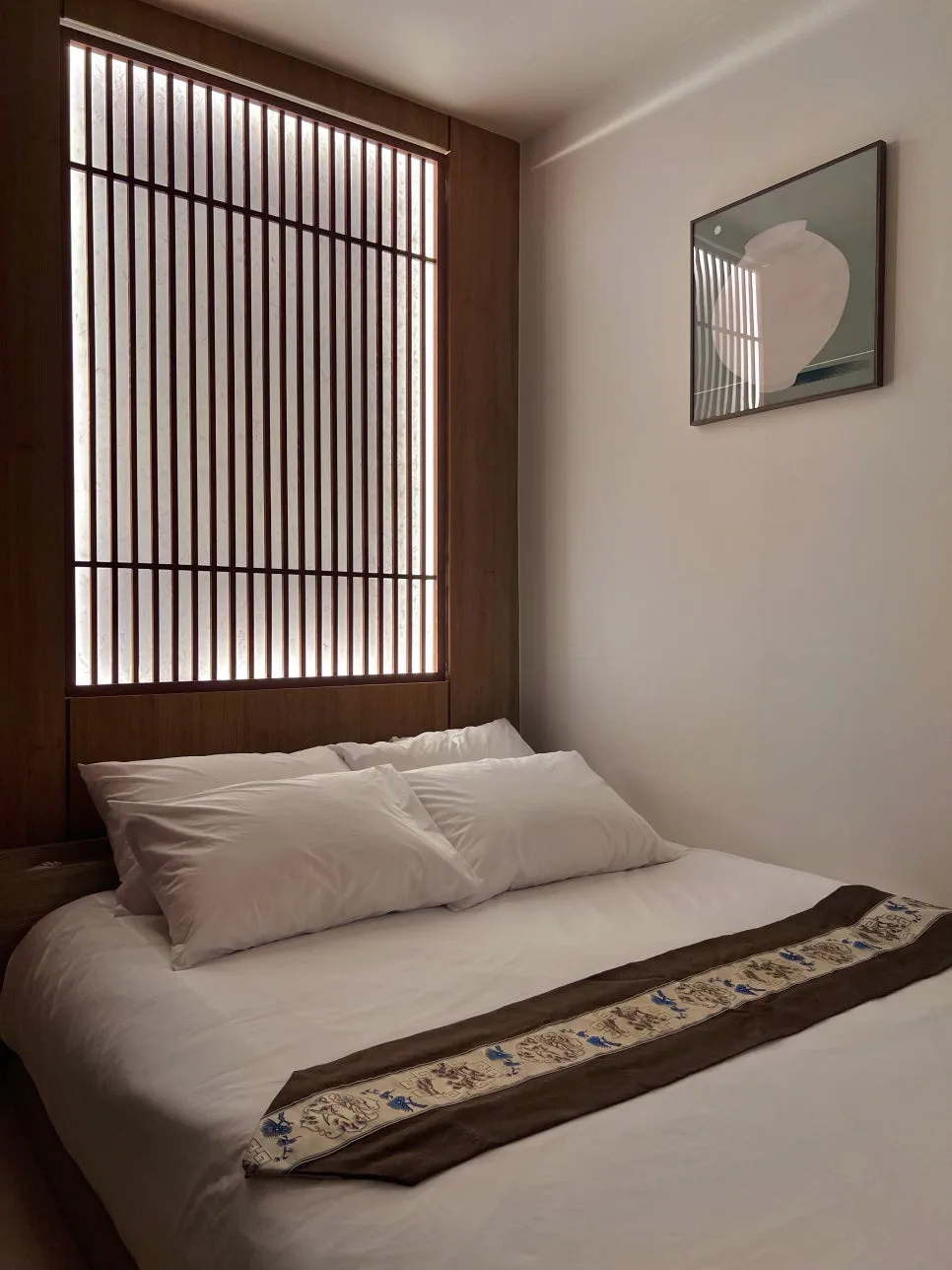
Yeonondam Gwangan Station Branch About a 3-minute walk from Gwangan Station. This private stay has two bedrooms plus a living room and kitchen, making it a great fit for families or groups of friends who want to explore different parts of Busan by subway. Gwangalli Beach is also within walking distance. If you plan to explore Busan by public transportation, Gwangan Station Branch |
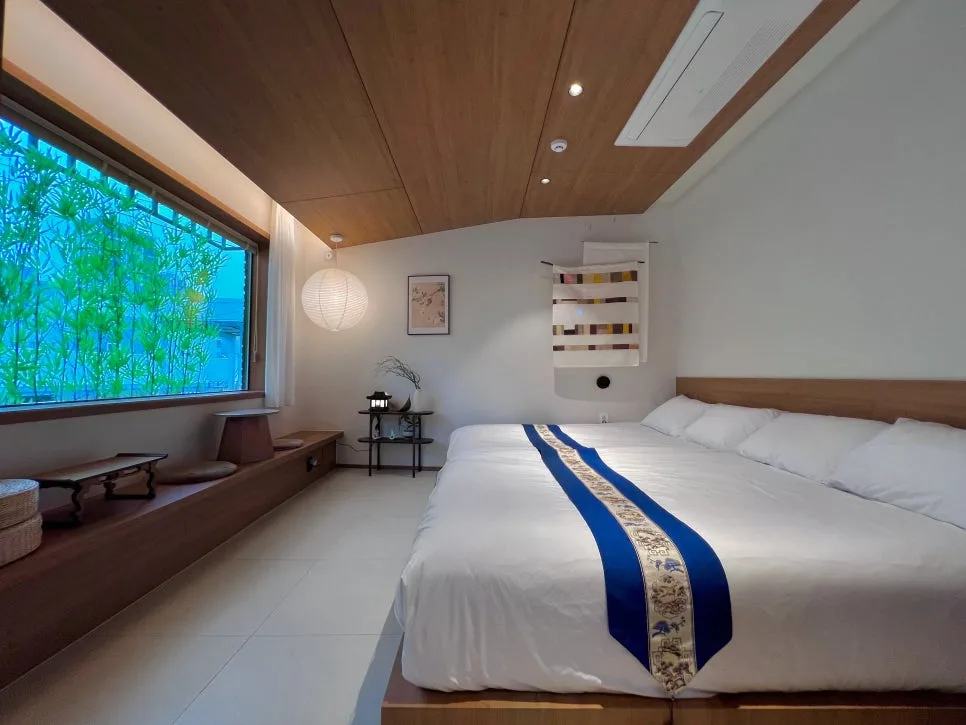
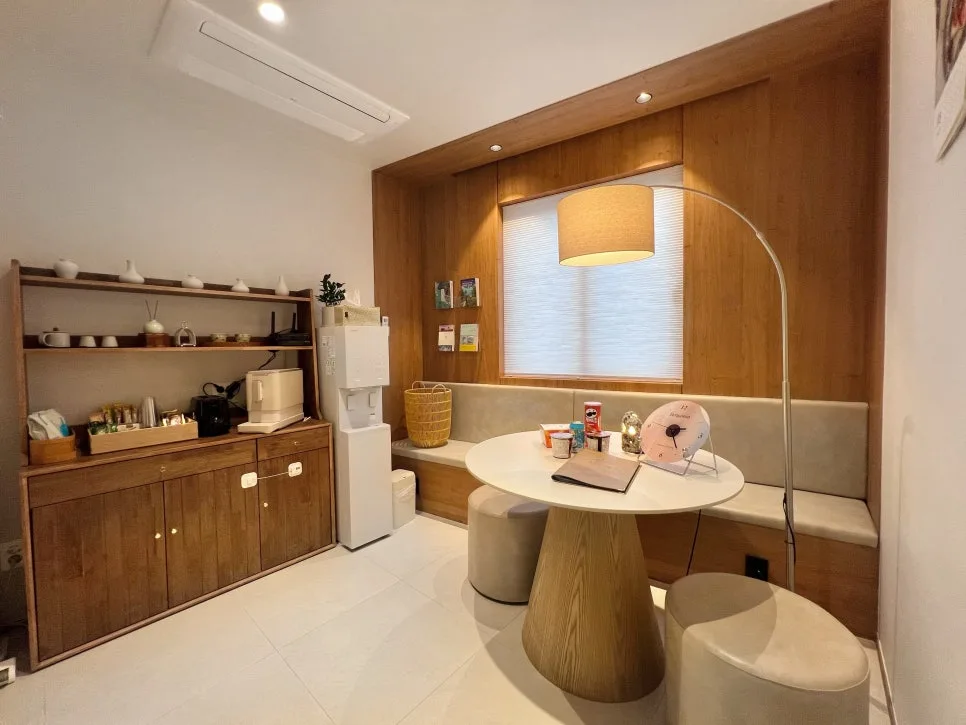
|
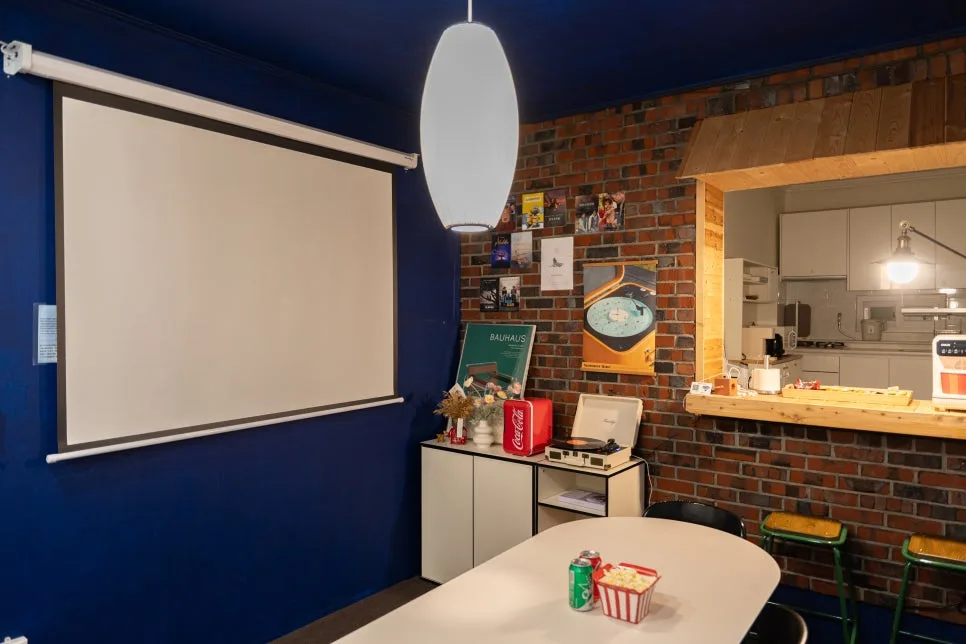
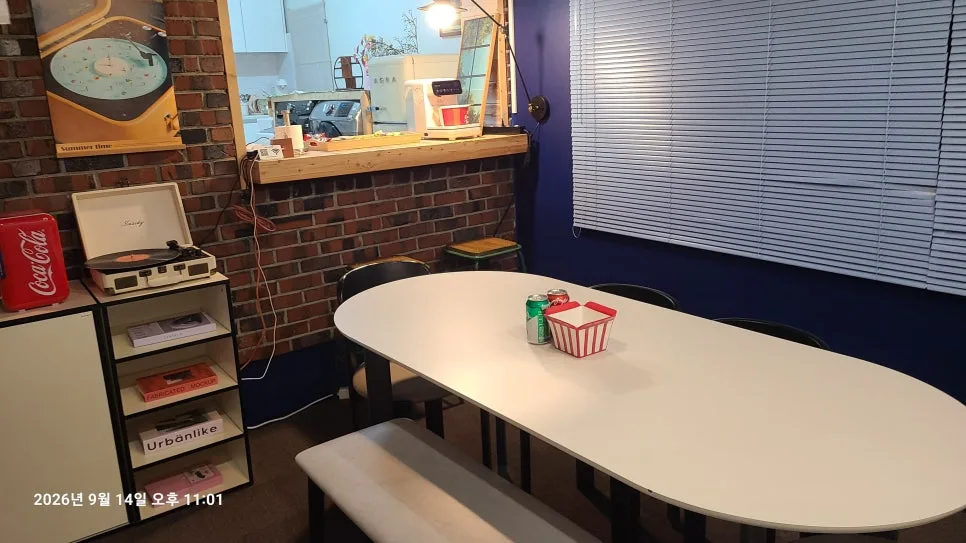
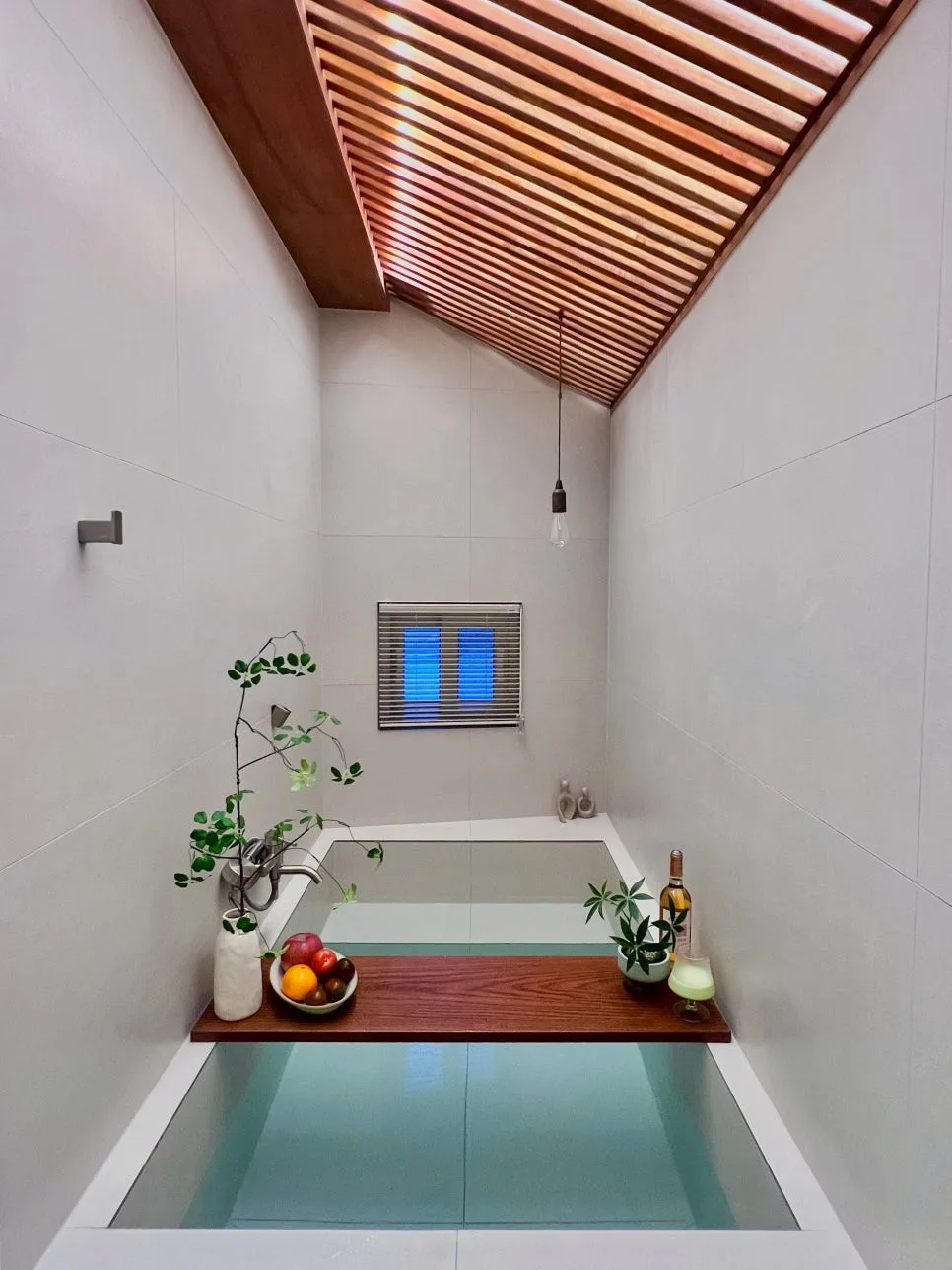
Yeonondam Gwangalli Beach Branch About a 2-minute walk from Gwangalli Beach. This is a one-group-per-day private stay with two bedrooms, two bathrooms, a jacuzzi, and a cinema room. It’s perfect if you want to spend the day exploring Busan and then come back at night to enjoy the beach and Gwangan Bridge views. If you want to stay close to the beach in Gwangalli, Gwangalli Beach Branch |
Stay in Gwangalli, Busan
Stay your way at Yeonondam
|
One-line summary · Busan is made up of 15 districts plus 1 county (Gijang-gun), for a total of 16 areas, and each one has a very different feel—beaches, downtown neighborhoods, mountains, rivers, and markets all included. · For a first trip, focus on Gwangalli, Haeundae, Nampo, Yeongdo, and Seomyeon. On a return trip, expand toward Dadaepo, Oryukdo, Dongnae, and Geumjeongsan. · Yeonondam operates two private stays in Gwangalli: Gwangan Station Branch, which works well for public transit-based travel and is about a 3-minute walk from Gwangan Station, and Gwangalli Beach Branch, which is about a 2-minute walk from Gwangalli Beach. |
|
Yeonondam accommodation guide The destination information in this post is organized based on each attraction and is separate from Yeonondam’s accommodation policies. Yeonondam Gwangalli Beach Branch and Yeonondam Gwangan Station Branch are both well located for a Gwangalli-based Busan itinerary. That said, under the stay’s house rules, pets are not allowed, outside visitors are restricted, smoking is prohibited indoors, and guests are asked to keep noise down after 10:00 p.m. (22:00). So even if something is allowed at a tourist attraction, it may still be restricted at the accommodation. Please check Yeonondam’s stay guidelines before booking. |
|
Official sources and information date This post was compiled based on official tourism materials as of September 8, 2026, including Visit Busan (visitbusan.net), Busan Metropolitan City (busan.go.kr), and official resources from Buk-gu and the Busan Tourism Organization. Newer sightseeing points such as Suyeong River Human Bridge, Geumbit Noeul Bridge (382 meters long), and Gamdong Narutgil Riverwalk were verified using official Busan City and Buk-gu sources. Since opening hours, admission fees, and closure days can change, please double-check each attraction’s official notice before visiting. This Busan travel guide was directly compiled by the Yeonondam blog. |
#busan travel #busan travel guide #best places to visit in busan #busan tourism #busan itinerary #busan 2 nights 3 days #busan 3 nights 4 days #gwangalli #haeundae #gijang #seomyeon #jeonpo #nampo #yeongdo #songdo #gamcheon culture village #dadaepo #oryukdo #igidae #dongnae #geumjeongsan #beomeosa #gadeokdo #busan accommodation #gwangalli accommodation #yeonondam